EN
EN


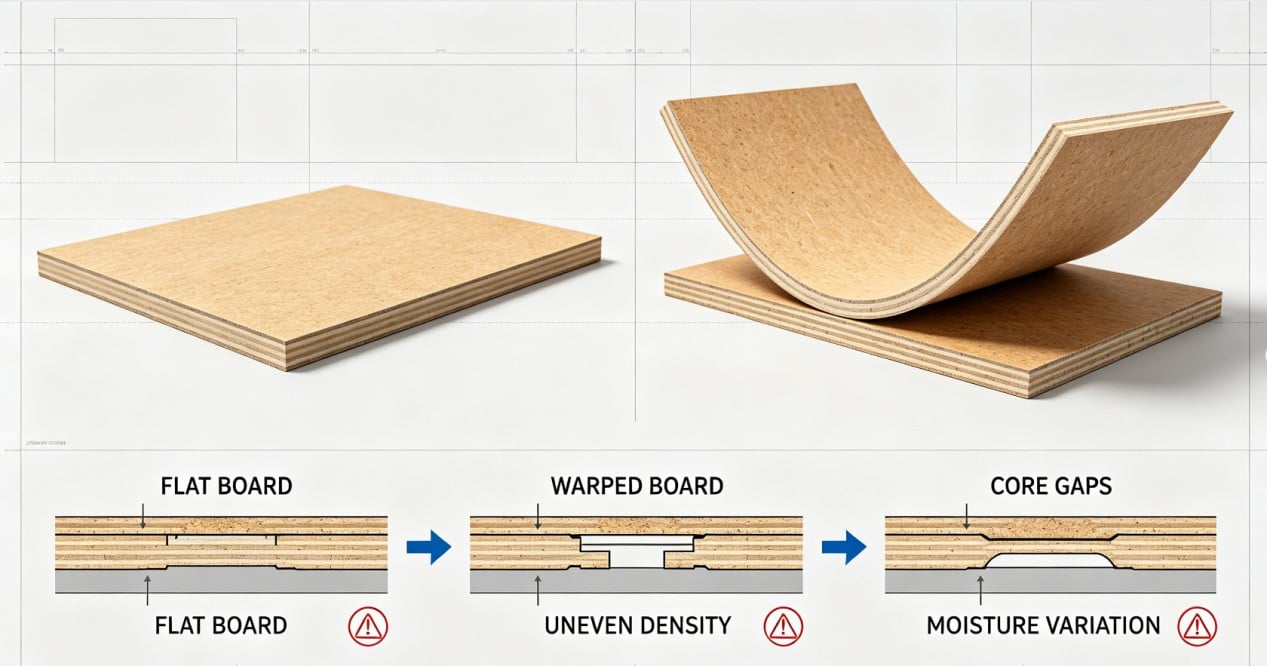
Warping of boards is a common complaint for exported furniture orders. It can happen during long-distance container shipping, storage at the destination warehouse, or later during installation and use. Many buyers blame it directly on poor board quality, but in reality, warping is usually the result of multiple factors combined, like the core material, surface finishing process, and storage and transportation conditions.
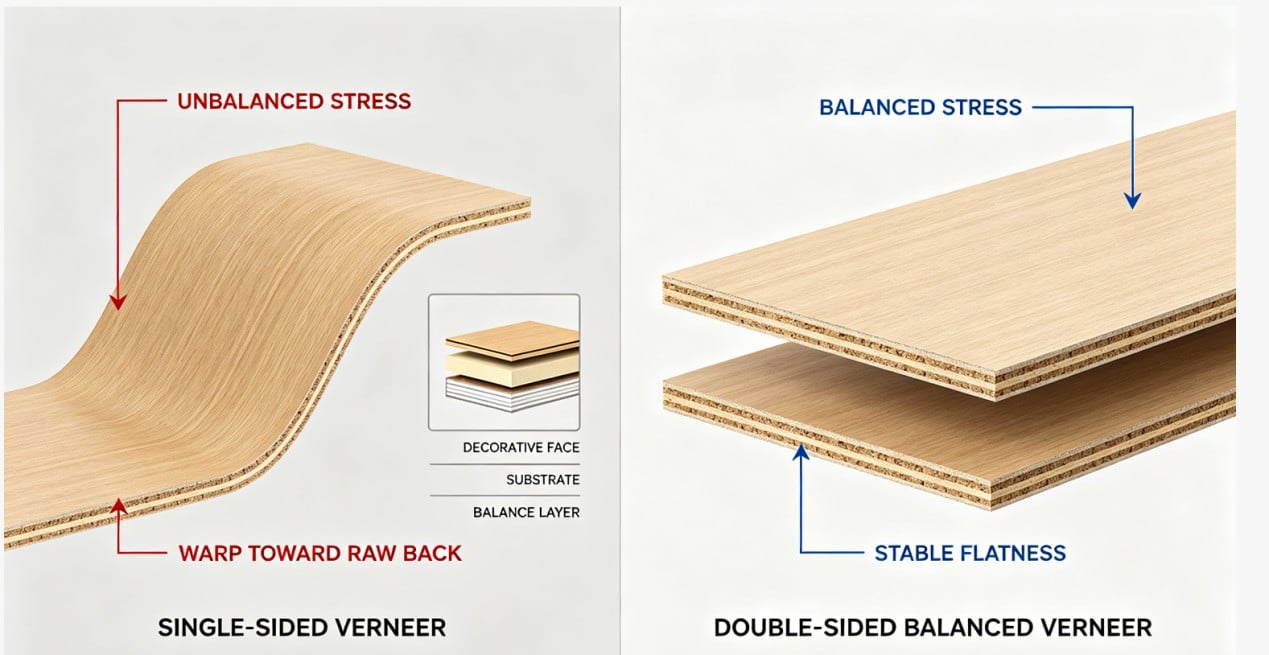
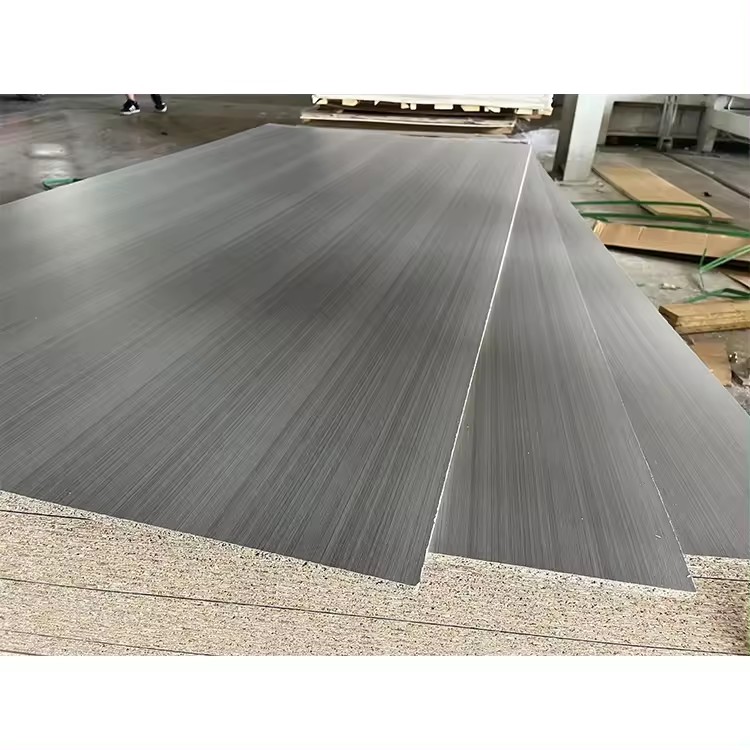
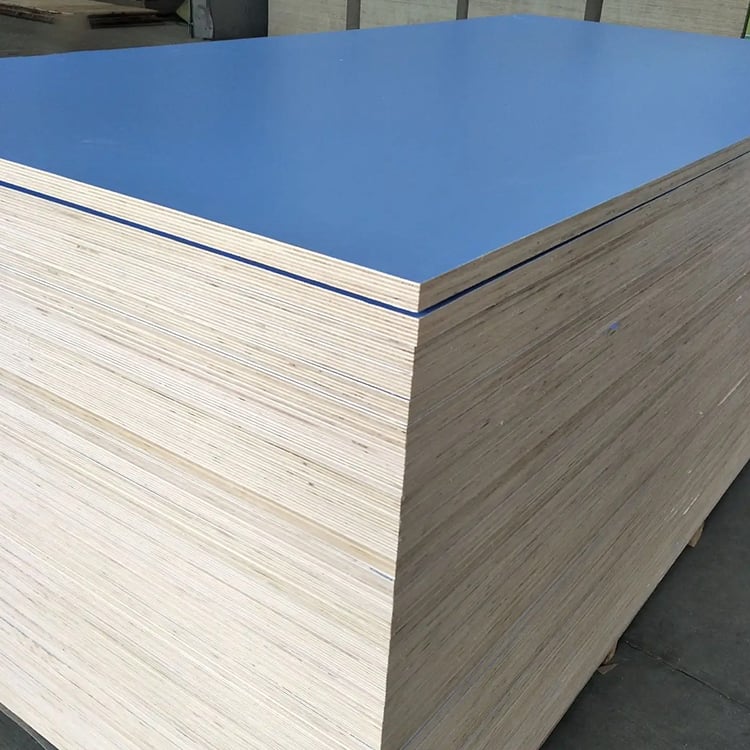
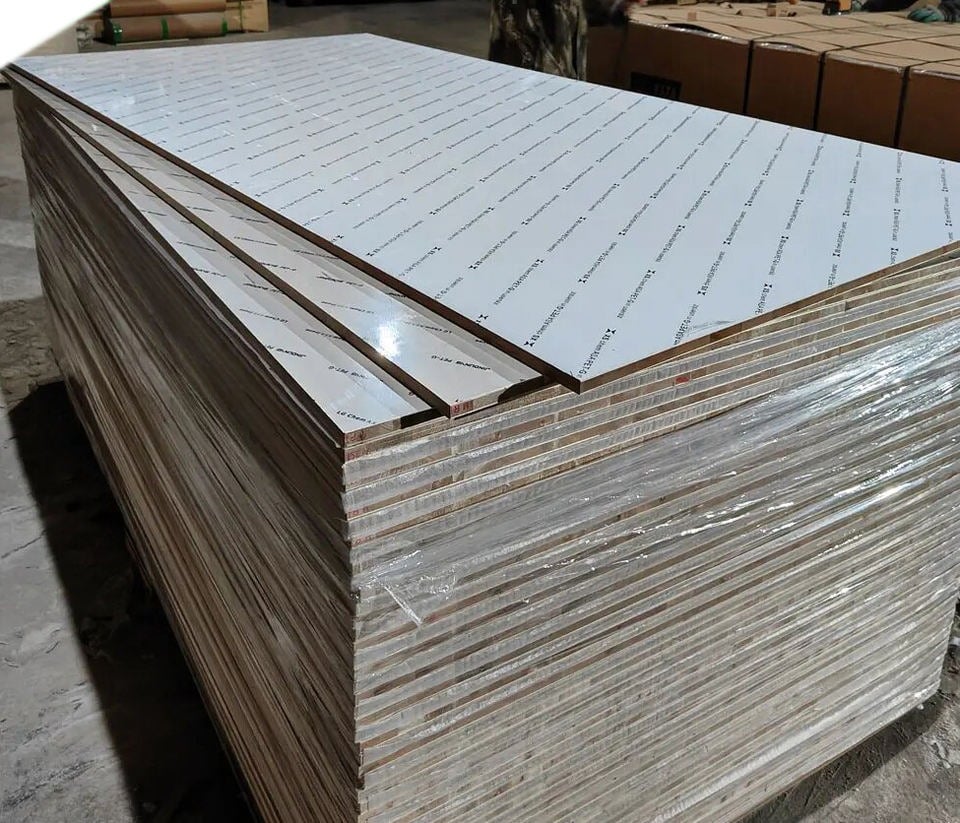
The first point comes from the inherent qualities of the base material itself. Different base materials have different structural characteristics: if the gaps between the solid wood strips inside a plywood are too large or the moisture content of the core is uneven, it can warp easily later; MDF or particle board can bend if the density is uneven and the surface can't handle stress; plywood relies on its cross-laminated structure to resist deformation, but if the veneer thickness or glue quality is subpar, it can fail too. For long-span laminated panels or large door panels, even if the base material is good, you still need hardware and structural components for reinforcement—you can't rely solely on the board to resist bending.
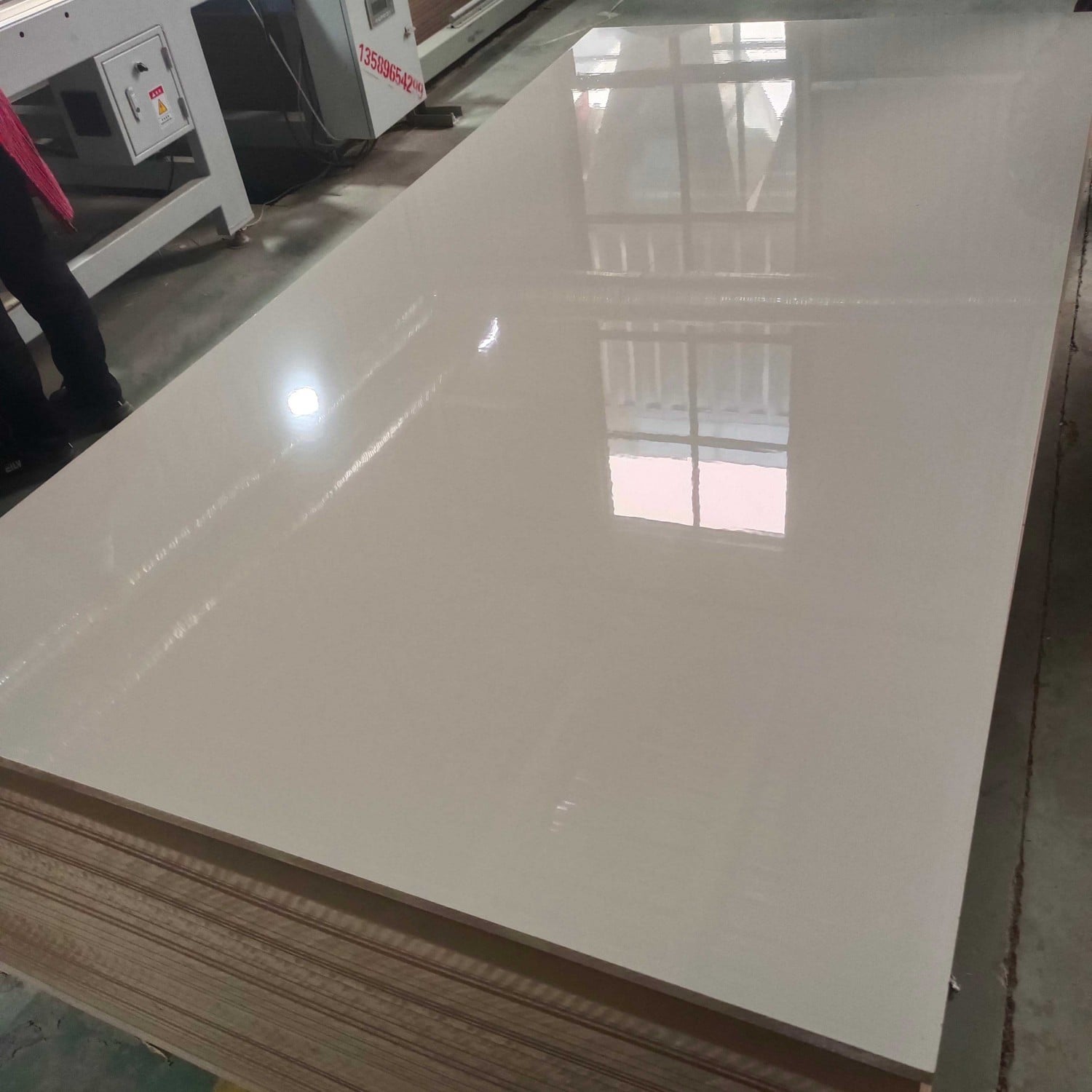
The second point is the risks brought by the veneer pressing process. Applying veneer to only one side of a board is a common cause of warping. One side has a decorative film while the other is just the plain board, causing uneven stress and making the board bend toward the non-veneered side. So, cabinets and door panels should preferably use double-sided veneer pressing. If the budget only allows for a single-side veneer, at least a balancing sheet should be applied to the back to even out the board's stress. Many low-cost orders skip this balancing layer, which can lead to warping issues. Also, improper control of pressing temperature or pressure can damage the internal structure of the board.
The third point is about changes in humidity during shipping and storage. Engineered boards are very sensitive to environmental humidity. From the production environment at home, the high-humidity ship holds at sea, to the dry warehouses in the destination country, huge differences in humidity can cause the boards to absorb moisture or lose water, leading to deformation. Even if the boards leave the factory perfectly fine, if the packaging isn’t moisture-proof enough, they can get damp during shipping and the whole batch can warp.
Here are a few practical tips for overseas buyers. First, be clear in the inquiry stage: single-sided veneer products must have a balancing layer on the back; for large panels, confirm the moisture content standard of the base material and ask for test data. Second, choose materials based on the application: for long-span load-bearing components, prioritize plywood or high-quality blockboard and be cautious with regular particleboard. Also, pay attention to packaging: export orders must be moisture-proof and wrapped, palletized, to prevent moisture damage inside the container.
Also, you need to set reasonable expectations—there’s no such thing as completely “zero deformation” in engineered boards. During the design phase, avoid unreasonable sizes, add support partitions to extra-long shelves, and install straighteners on large door panels.
When it comes to board deformation issues, it's too late to fix them after mass production. The most effective way to reduce overseas after-sales risks is to clarify the base material, balancing layer, moisture content, and moisture-proof packaging during the inquiry and sampling stages.
Stay tuned for more industry insights and company updates. Follow us on Facebook: https://www.facebook.com/share/r/19TYo9rTcS/
 Hot News
2026-09-17
2026-09-14
2026-09-11
Shandong Zhenshijie — China's trusted manufacturer of PET & melamine veneer panels for cabinets, kitchens & furniture. MDF, plywood, particleboard & more — custom sizes, textures & finishes.
located north of Xiaowan Line, Tanyi Town, Feixian County, Linyi City, Shandong Province.
Copyright © 2026 Shandong Zhenshijie International Trade CO,. LTD All rights reserved. Privacy Policy