EN

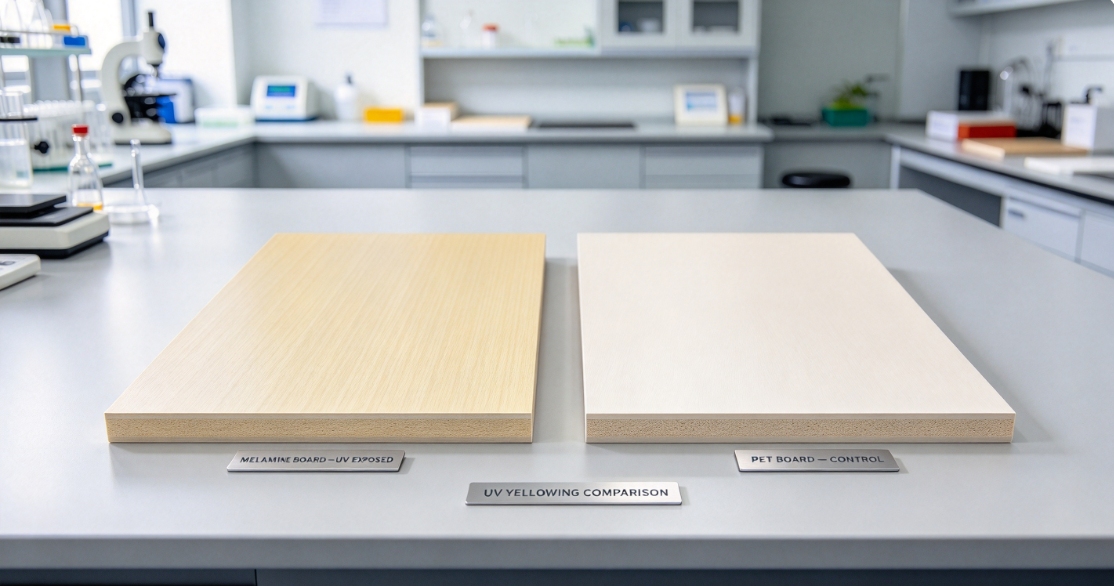
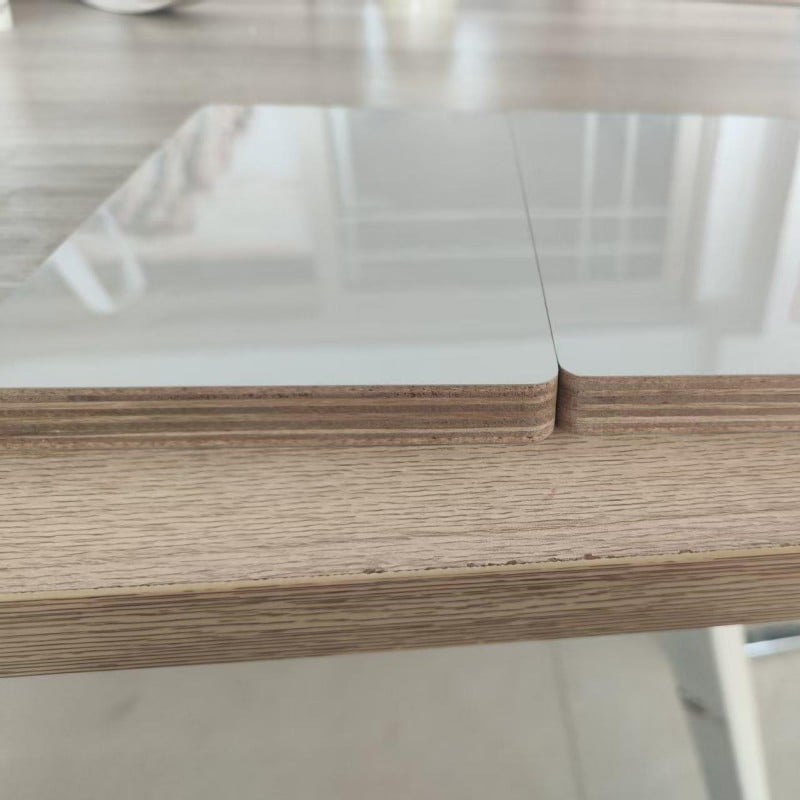
Many overseas‑client complaints do not surface right after shipment. Instead, issues appear months or even one year after installation. Cabinets by windows, sunroom furniture and showroom displays can gradually yellow and fade, diverging from the originally approved sample color. Yellowing‑resistance and UV‑aging performance are frequently overlooked procurement considerations, yet they heavily influence long‑term visual appearance. Melamine boards and PET boards show clear differences in light‑induced aging behavior.
Why Do Boards Yellow Or Fade?
Discoloration on decorative panels mainly occurs when surface materials are exposed long‑term to ultraviolet radiation, light and heat, triggering degradation of the polymer structure.
Standard melamine‑impregnated paper has basic weather‑resistant properties. However, conventional decorative prints generally contain no extra UV stabilizers. Under extended direct sunlight, panels will slowly fade or change color, and this effect is especially obvious on light‑colored or white panels.
In comparison, PET film has a more stable molecular structure and delivers better intrinsic anti‑yellowing performance than standard melamine paper. Premium UV‑modified PET films add UV absorbers into raw materials, further slowing light‑triggered yellowing, which makes them ideal for spaces with abundant natural light.
Important reminder: No material can completely avoid yellowing. UV‑resistant formulas only slow down aging; they cannot stop discoloration forever.
Understanding Accelerated Aging Tests
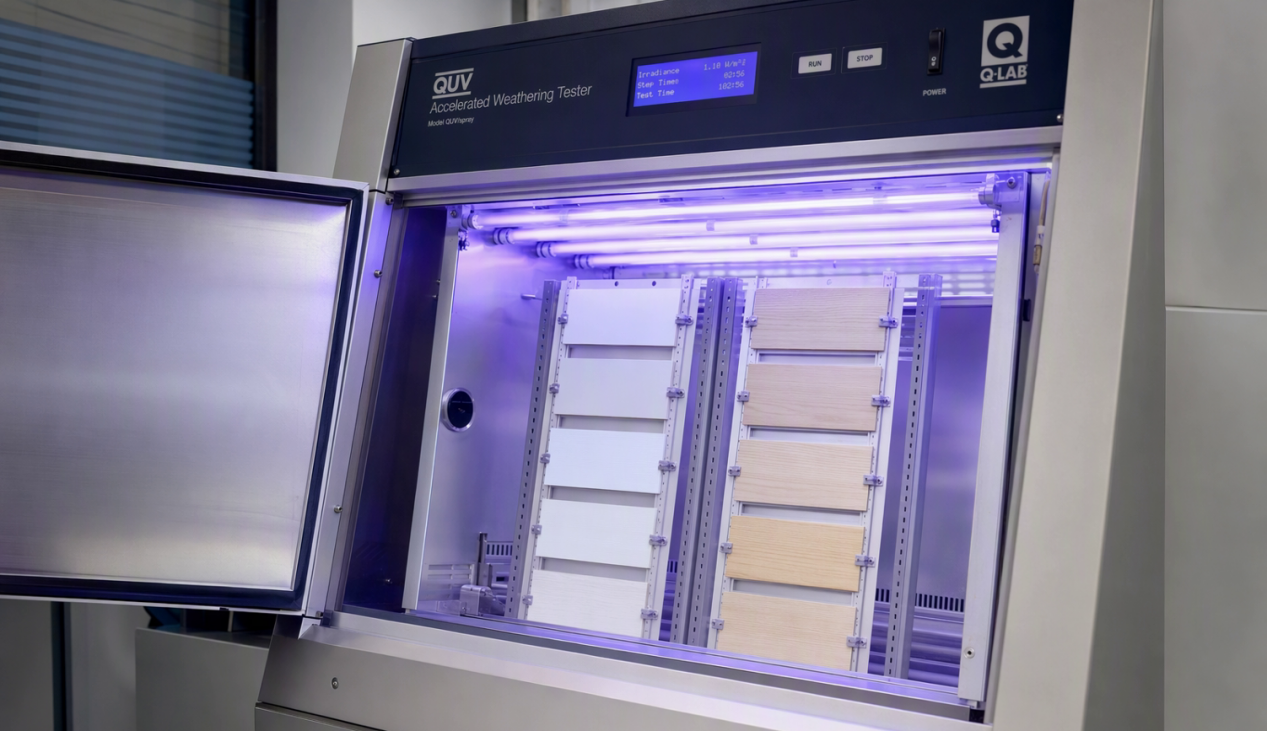
Overseas project buyers often request QUV accelerated UV‑aging test reports. These tests simulate real‑world sun‑exposure cycles with continuous irradiation and measure color difference (ΔE) before and after testing.
When reviewing lab reports, pay close attention to the ΔE value. Lower ΔE means less color shift after light exposure and better anti‑aging performance.
Make a clear distinction between regular indoor‑grade panels and custom UV‑resistant versions. Even for the same material type, different formulations create large gaps in anti‑yellowing performance. Do not take for granted that all PET boards are UV‑resistant.
Uv‑Resistant Melamine Pet Interior Panel Selection Guide Based On Spatial Context
Enclosed indoor spaces, wardrobes away from windows and inner cabinetry: In low‑light environments, standard melamine‑faced boards offer strong cost‑effectiveness. With a broad selection of decors, they fully satisfy functional requirements.
Cabinets near windows, sunrooms, showrooms, semi‑open corridors and window‑side dining zones: For areas receiving sustained natural light, opt for UV‑resistant modified PET‑faced boards. This recommendation applies particularly to light‑colored or pure‑white finishes.
Export orders for tropical or high‑sunlight regions: Confirm UV‑resistant formulations with your supplier. Clearly state anti‑yellowing requirements and color‑variation acceptance criteria within contracts. Set reasonable warranty expectations to prevent disputes caused by unrealistic customer demands.
Procurement Pitfalls To Avoid
Do not trust marketing claims stating a material will "never yellow". All organic surface materials will age gradually under long‑term light exposure. The best practice is to select material grades matching the actual application environment. Share transparent product performance information with overseas buyers and properly manage end‑user expectations.
 Hot News
2026-11-01
2026-10-29
2026-10-25
2026-10-22
Shandong Zhenshijie — China's trusted manufacturer of PET & melamine veneer panels for cabinets, kitchens & furniture. MDF, plywood, particleboard & more — custom sizes, textures & finishes.
located north of Xiaowan Line, Tanyi Town, Feixian County, Linyi City, Shandong Province.
Copyright © 2026 Shandong Zhenshijie International Trade CO,. LTD All rights reserved. Privacy Policy