EN


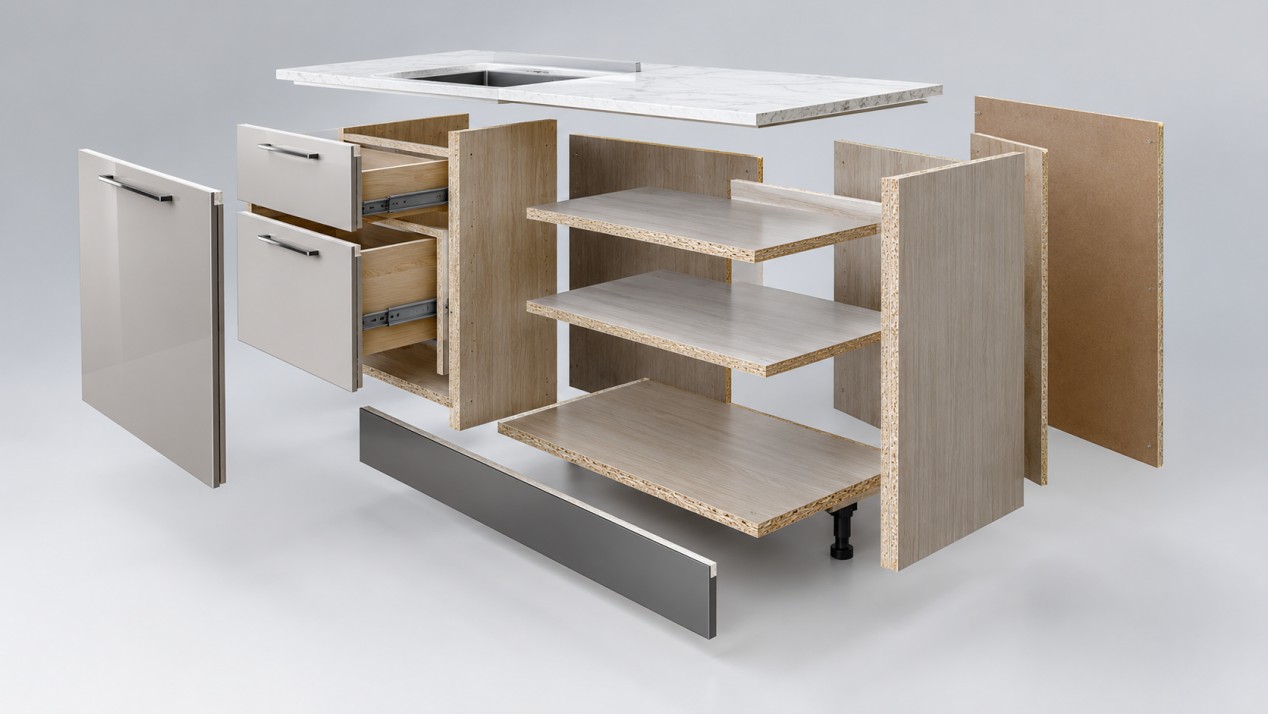
In some procurement processes, once the surface finish is selected, the same base material is used for all components throughout an entire cabinet unit. In reality, side panels, door panels, shelves, back panels, and drawer bottoms differ significantly in structural load, moisture exposure, and aesthetic requirements. Using a uniform material either leads to unnecessary costs in concealed areas or creates potential vulnerabilities in critical structural locations.
All base materials can be supplied as CARB P2 / EPA TSCA Title VI compliant; E1/E0‑rated and FSC‑certified options are also available upon request. Standard thicknesses include 16 mm, 18 mm, and 25 mm (0.63 in, 0.71 in, and 0.98 in).
Door Panels, Side Panels, And Shelves
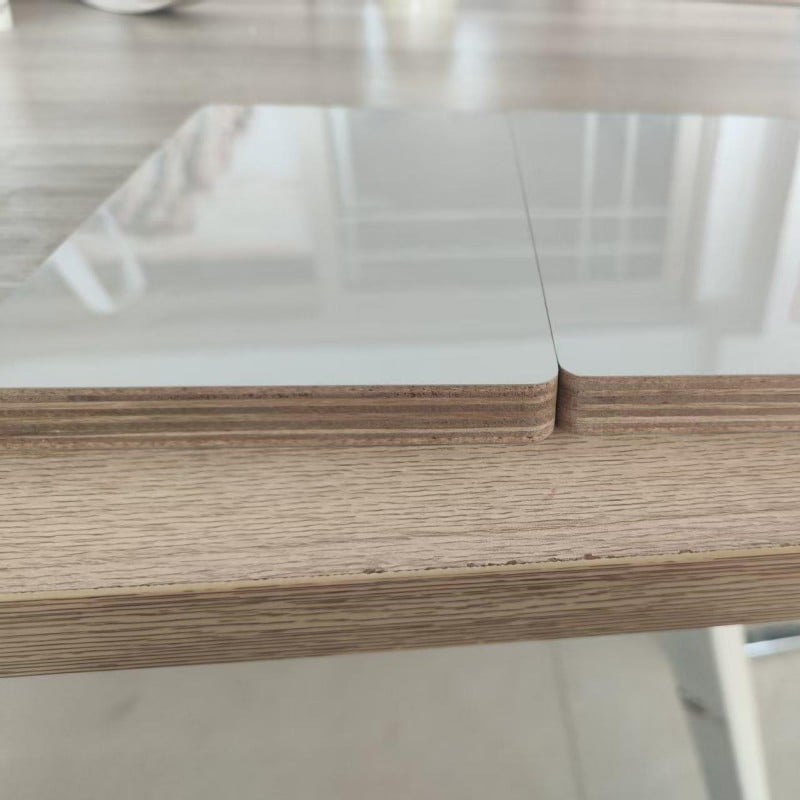
Door panels have the most stringent aesthetic requirements. PETG MDF offers excellent machinability for high‑gloss or ultra‑matte, soft‑touch finishes. Its uniform fiber structure is ideal for milled‑profile doors, and the surface film maintains full coverage even after edge‑milling. For flat‑panel doors in budget‑conscious commercial projects, melamine MDF with synchronized‑texture finishes can visually emulate a high‑end look, provided that the edge‑banding material matches the surface in terms of scratch resistance.
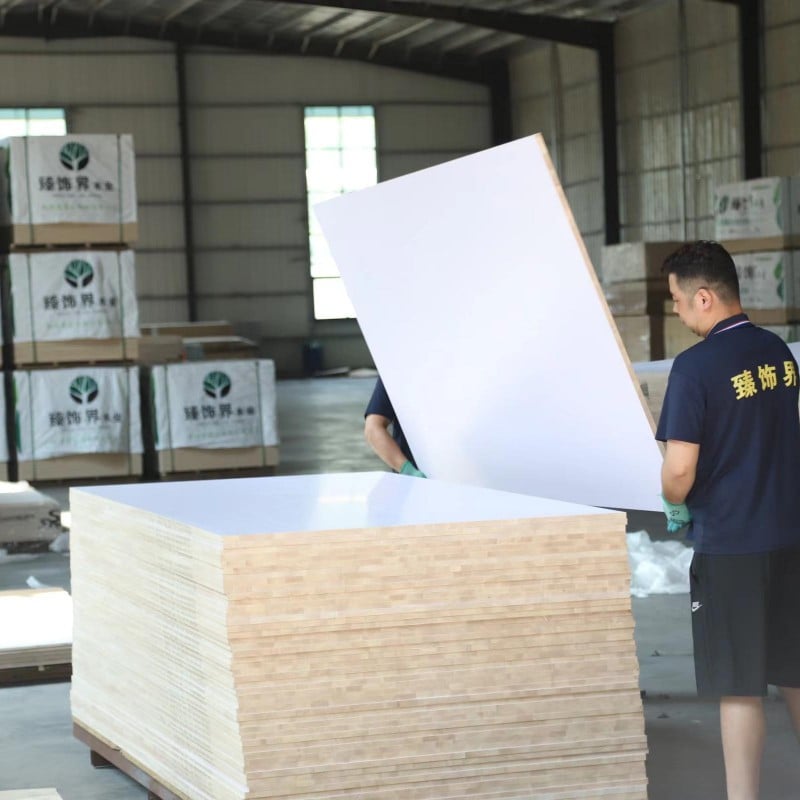
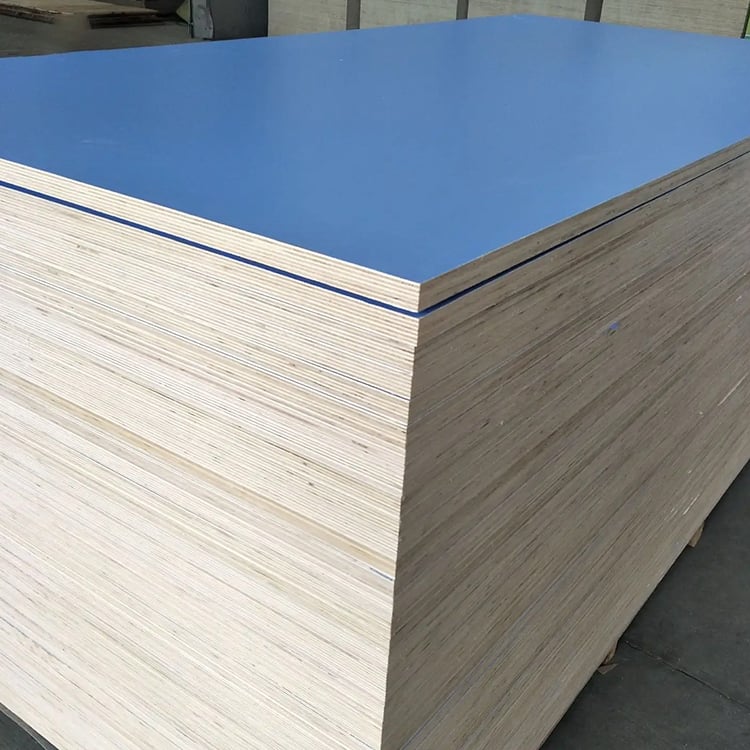
Shelves must balance load‑bearing capacity with moisture resistance. For base cabinets in kitchens or bathrooms, melamine plywood and PETG plywood offer superior screw‑holding strength and dimensional stability compared to particle board or standard MDF. When spans exceed 900 mm (35.4 in), melamine blockboard and PETG blockboard, with their solid‑wood cores, provide greater resistance to deflection under long‑term loads. For exposed side panels, the choice between PETG MDF and melamine particle board can be made based on aesthetic requirements and budget; for concealed side panels positioned against a wall, melamine particle board is sufficient to meet structural needs in dry environments.
Sink Cabinets
It is difficult to completely prevent occasional water leakage in sink cabinets. The continuous surface layer of PETG particle board helps prevent condensation or minor splashes from penetrating the board surface. However, once moisture reaches the edges or the underside, the water resistance of the core material becomes the decisive factor. The cross‑laminated structure of melamine plywood and PETG plywood offers significantly better resistance to moisture diffusion compared to particle board or MDF. For high‑end projects or environments prone to long‑term humidity, PETG blockboard serves as an upgraded option for sink cabinet side panels; the solid wood core strips typically exhibit superior dimensional stability when exposed to moisture compared to fiberboard.
Back Panels And Drawer Bottoms
Back panels generally do not bear weight, remain hidden from view, and are subject to a moderate risk of moisture exposure. Thin‑gauge melamine particle board is the standard choice, though the joints where it connects to the cabinet carcass must be properly sealed. For projects in high‑humidity coastal regions, back panels may be upgraded to melamine MDF or thin‑gauge melamine plywood to reduce the risk of cabinet deformation caused by moisture absorption and subsequent expansion. Drawer bottoms do not require high surface wear resistance, so melamine particle board is sufficient. If the drawer fronts feature a PETG finish, using PETG particle board for the drawer bottoms can ensure color consistency within the unit, though this is not a functional necessity.
Cabinet Component–Substrate Reference Table
| Cabinet Component | Recommended Substrate |
| Door panels (high‑gloss / soft‑touch) | PETG MDF |
| Door panels (flat‑panel, budget projects) | Melamine MDF |
| Exposed side panels | PETG MDF or melamine particle board |
| Concealed side panels (against wall) | Melamine particle board |
| Shelves (standard span) | Melamine plywood or PETG plywood |
| Shelves (span over 900 mm / 35.4 in) | Melamine blockboard or PETG blockboard |
| Sink cabinet side panels and shelves | PETG plywood or melamine plywood |
| Sink cabinet upgrade (high‑humidity projects) | PETG blockboard |
| Back panels (standard) | Thin‑gauge melamine particle board |
| Back panels (coastal / high‑humidity) | Melamine MDF or thin‑gauge melamine plywood |
| Drawer bottoms (standard) | Melamine particle board |
| Drawer bottoms (PETG‑faced drawer fronts) | PETG particle board |
Practical Material Selection
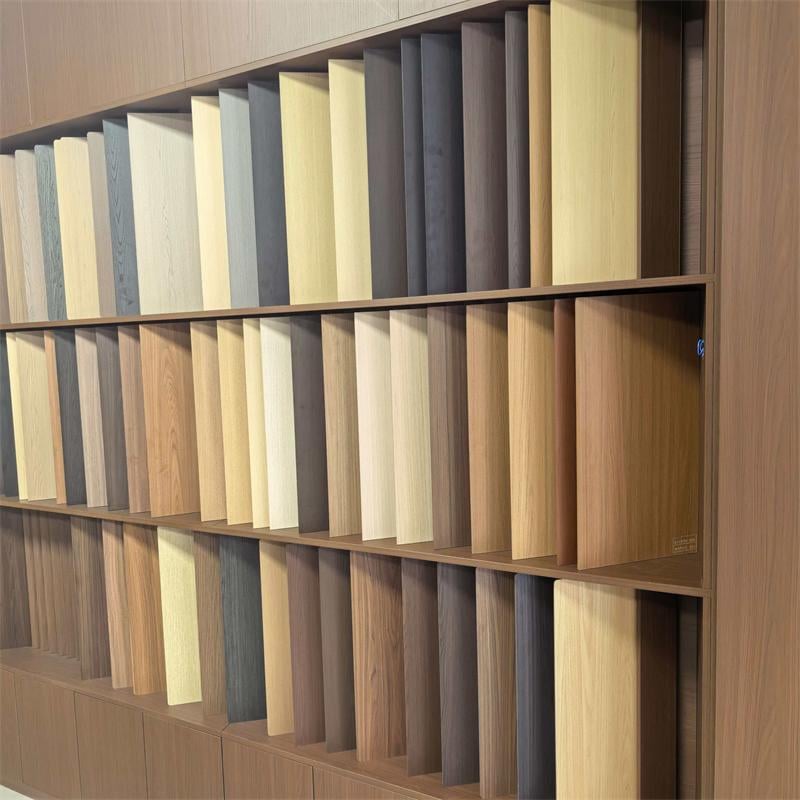
During the inquiry phase, it is advisable to categorize cabinet components into four types — visible exterior parts, load‑bearing parts, moisture‑exposed parts, and concealed parts — and determine the appropriate surface materials and substrates for each. For instance, door panels could utilize PETG MDF; cabinet side panels, melamine particle board; sink cabinet side panels and shelves, PETG plywood or melamine plywood; back panels, thin‑gauge melamine particle board; and heavy‑duty shelves, PETG blockboard or melamine blockboard. This approach allows for the optimization of total costs while ensuring sufficient performance margins for critical components. Zhenshijie supplies all the aforementioned substrate and surface material combinations. We can provide tailored material selection recommendations for specific cabinet sections based on the target market's humidity levels, cabinet construction, and edge‑banding processes, along with corresponding samples.
 Hot News
2026-11-01
2026-10-29
2026-10-25
2026-10-22
Shandong Zhenshijie — China's trusted manufacturer of PET & melamine veneer panels for cabinets, kitchens & furniture. MDF, plywood, particleboard & more — custom sizes, textures & finishes.
located north of Xiaowan Line, Tanyi Town, Feixian County, Linyi City, Shandong Province.
Copyright © 2026 Shandong Zhenshijie International Trade CO,. LTD All rights reserved. Privacy Policy