EN
EN


PETG MDF vs PETG Particle Board vs PETG Plywood: Which Substrate Is Best for Your Cabinet Project?
Table of Contents
What Is PETG Decorative Board?
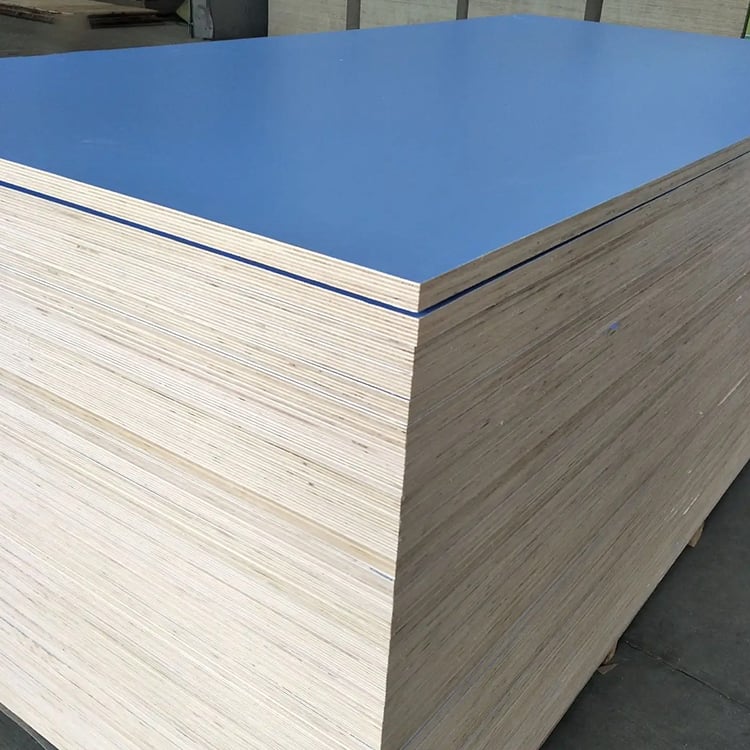
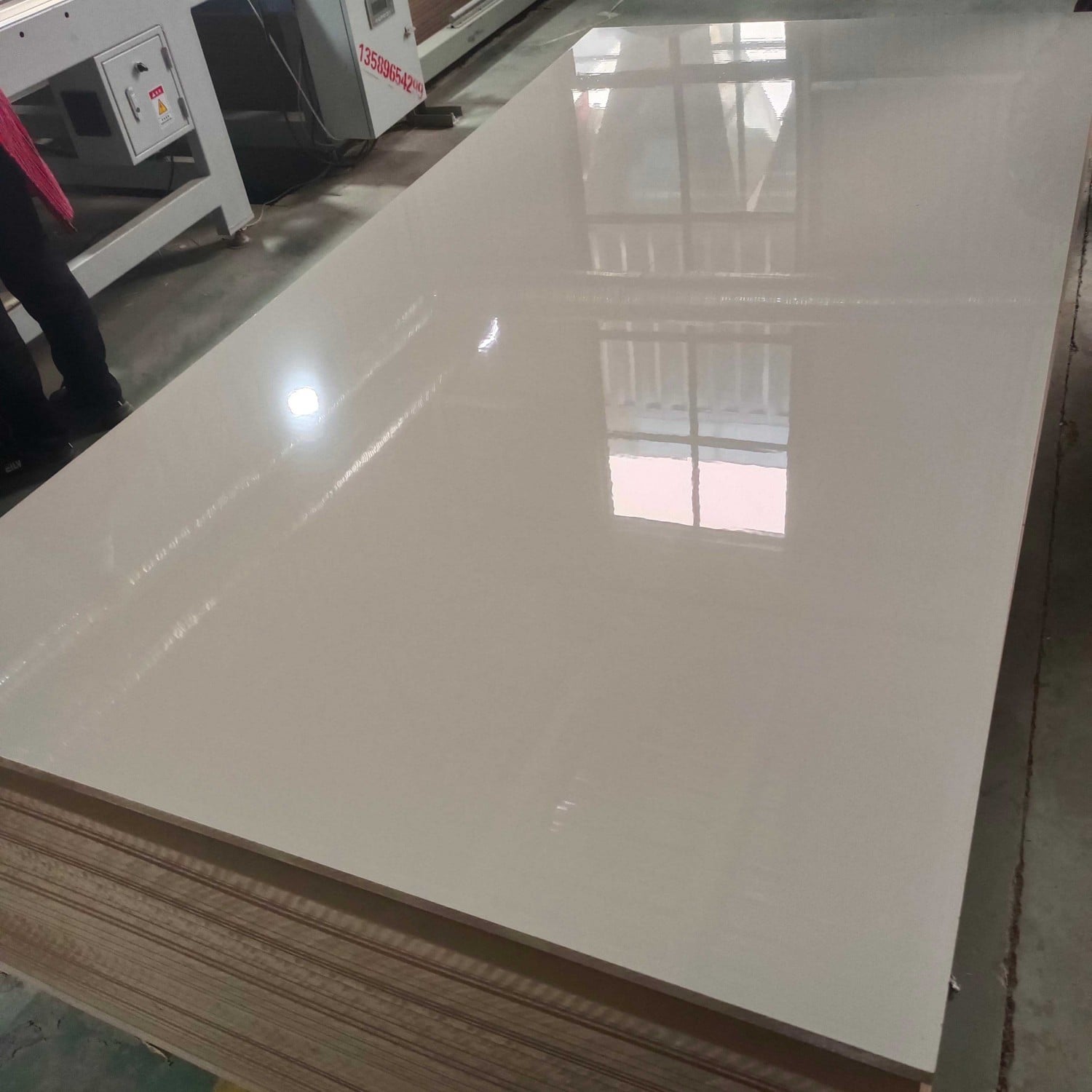
PETG decorative board has become one of the fastest-growing surface materials in the modern furniture industry. Its smooth finish, excellent scratch resistance, low VOC emissions, and recyclable characteristics make it an increasingly popular alternative to traditional high-gloss and painted panels.
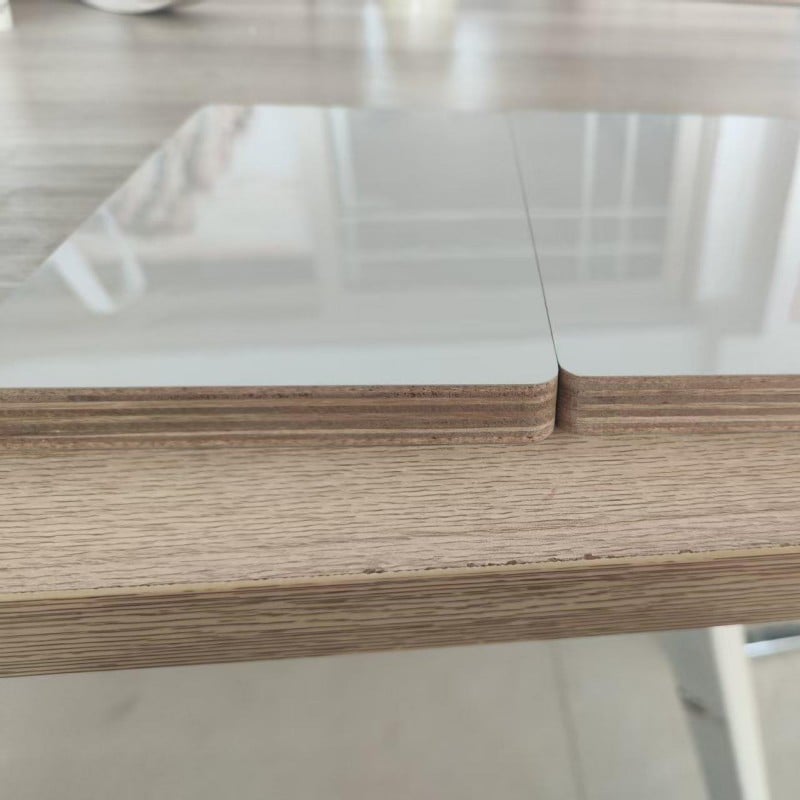
Unlike melamine paper or PVC film, PETG is a thermoplastic decorative film laminated onto engineered wood panels using advanced hot-press technology. The final product combines an attractive appearance with enhanced durability, making it suitable for residential, commercial, and hospitality furniture.
However, one important factor is often overlooked by buyers:
PETG is only the surface finish. The overall performance of the finished panel depends largely on the substrate underneath.
Choosing the wrong core material may lead to swelling, reduced screw-holding strength, shorter service life, or unnecessary production costs.
For cabinet manufacturers, furniture factories, distributors, and project contractors, understanding the differences between PETG MDF, PETG particle board, and PETG plywood is essential before placing an order.
Why the Substrate Matters
Although different PETG boards may appear identical on the surface, their internal structure determines how they perform during manufacturing and long-term use.
The substrate influences:
For example, two cabinet doors may use the same PETG film but behave very differently after installation simply because they are built on different substrates.
Selecting the appropriate core material is therefore just as important as choosing the decorative finish itself.
PETG MDF vs PETG Particle Board vs PETG Plywood
Quick Comparison
| Feature | PETG MDF | PETG Particle Board | PETG Plywood |
| Surface Flatness | ★★★★★ | ★★★★☆ | ★★★☆☆ |
| Moisture Resistance | ★★★☆☆ | ★★★☆☆ | ★★★★★ |
| Screw Holding | ★★★★☆ | ★★★☆☆ | ★★★★★ |
| Machining Performance | ★★★★★ | ★★★★☆ | ★★★☆☆ |
| Weight | Medium | Light | Heavy |
| Cost | Medium | Lowest | Highest |
| Recommended Use | Painted-style furniture, cabinet doors | Cost-effective furniture |
Premium kitchens, bathrooms, commercial projects |
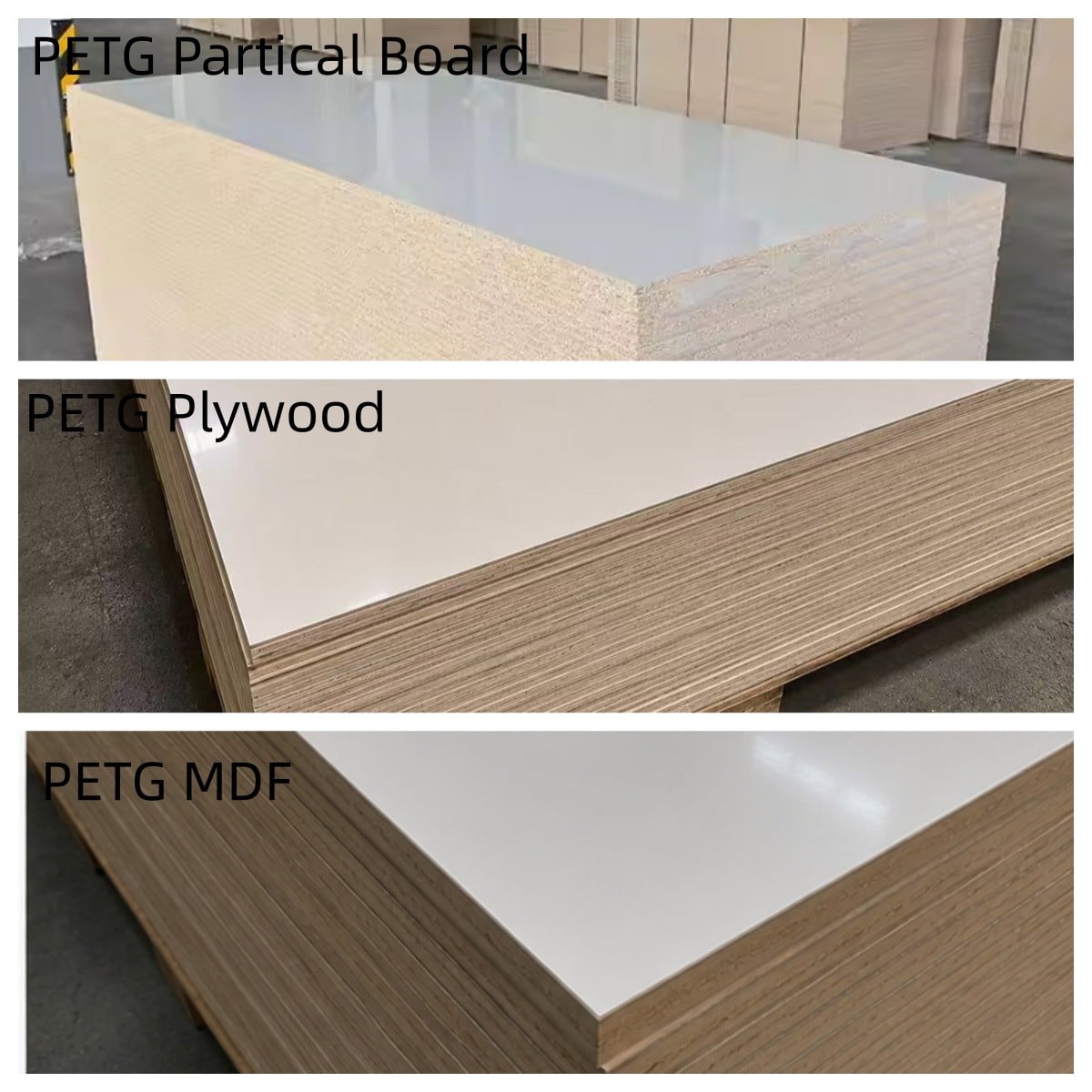
Key Takeaway
If appearance and machining precision are your priorities, PETG MDF is usually the preferred option.
If your project is highly price-sensitive, PETG particle board provides excellent value while maintaining attractive decorative performance.
For environments exposed to frequent moisture or requiring maximum structural strength, PETG plywood generally offers the best long-term durability.
PETG MDF
PETG MDF combines the smooth surface of medium-density fiberboard with the decorative advantages of PETG film.
Because MDF has a uniform internal structure, it produces exceptionally smooth surfaces after lamination and allows precise CNC machining for complex cabinet door profiles.
Advantages
Limitations
Compared with plywood, standard MDF offers lower moisture resistance and is not recommended for long-term exposure to humid environments unless moisture-resistant MDF is specified.
Typical Applications
PETG MDF is widely used for:
PETG Particle Board
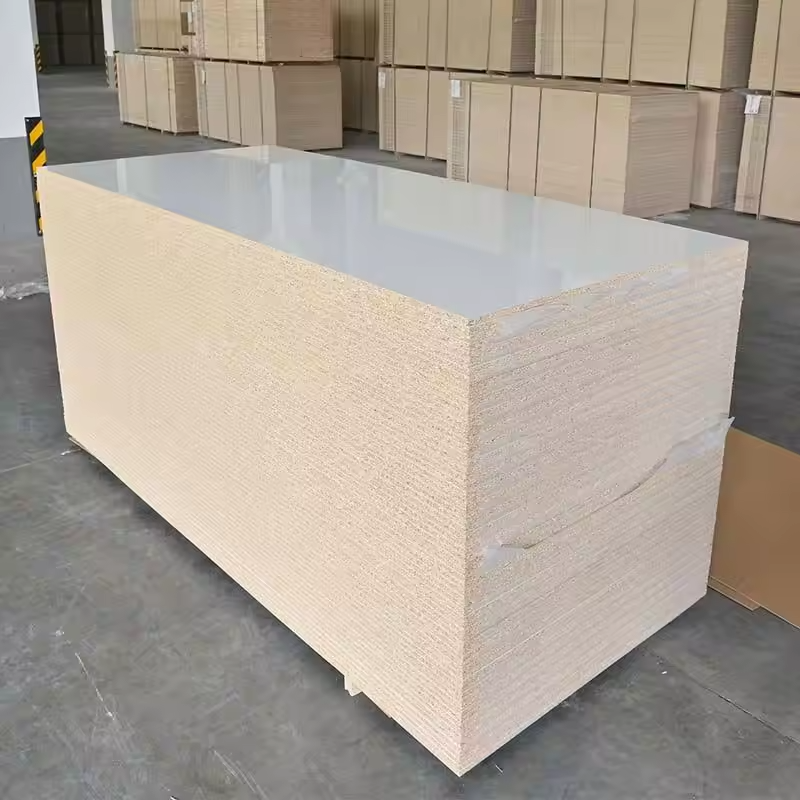
PETG particle board remains one of the most popular choices for large-scale furniture manufacturing because it offers an excellent balance between cost, appearance, and production efficiency.
Modern particle board has significantly improved in quality compared with earlier generations. When manufactured with high-density cores and laminated using premium PETG film, it can satisfy the performance requirements of most residential furniture projects.
Advantages
Limitations
Compared with MDF and plywood, particle board generally provides lower screw-holding strength and reduced resistance to prolonged moisture exposure.
Proper edge sealing is especially important to prevent water penetration during long-term use.
 Hot News
2026-10-06
2026-10-02
2026-09-29
Shandong Zhenshijie — China's trusted manufacturer of PET & melamine veneer panels for cabinets, kitchens & furniture. MDF, plywood, particleboard & more — custom sizes, textures & finishes.
located north of Xiaowan Line, Tanyi Town, Feixian County, Linyi City, Shandong Province.
Copyright © 2026 Shandong Zhenshijie International Trade CO,. LTD All rights reserved. Privacy Policy