EN
EN


Table of Contents
What Are E0 and E1 Melamine Particle Boards?
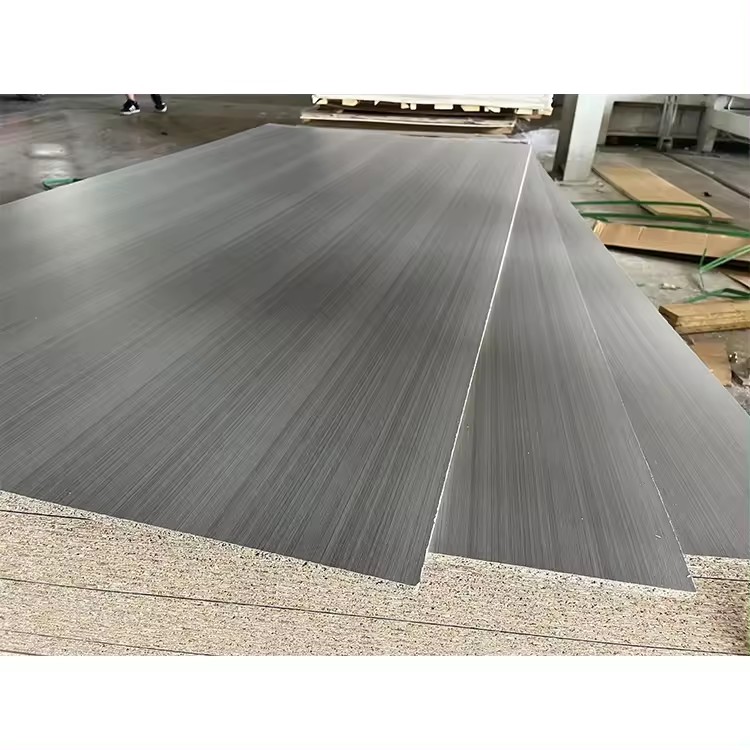
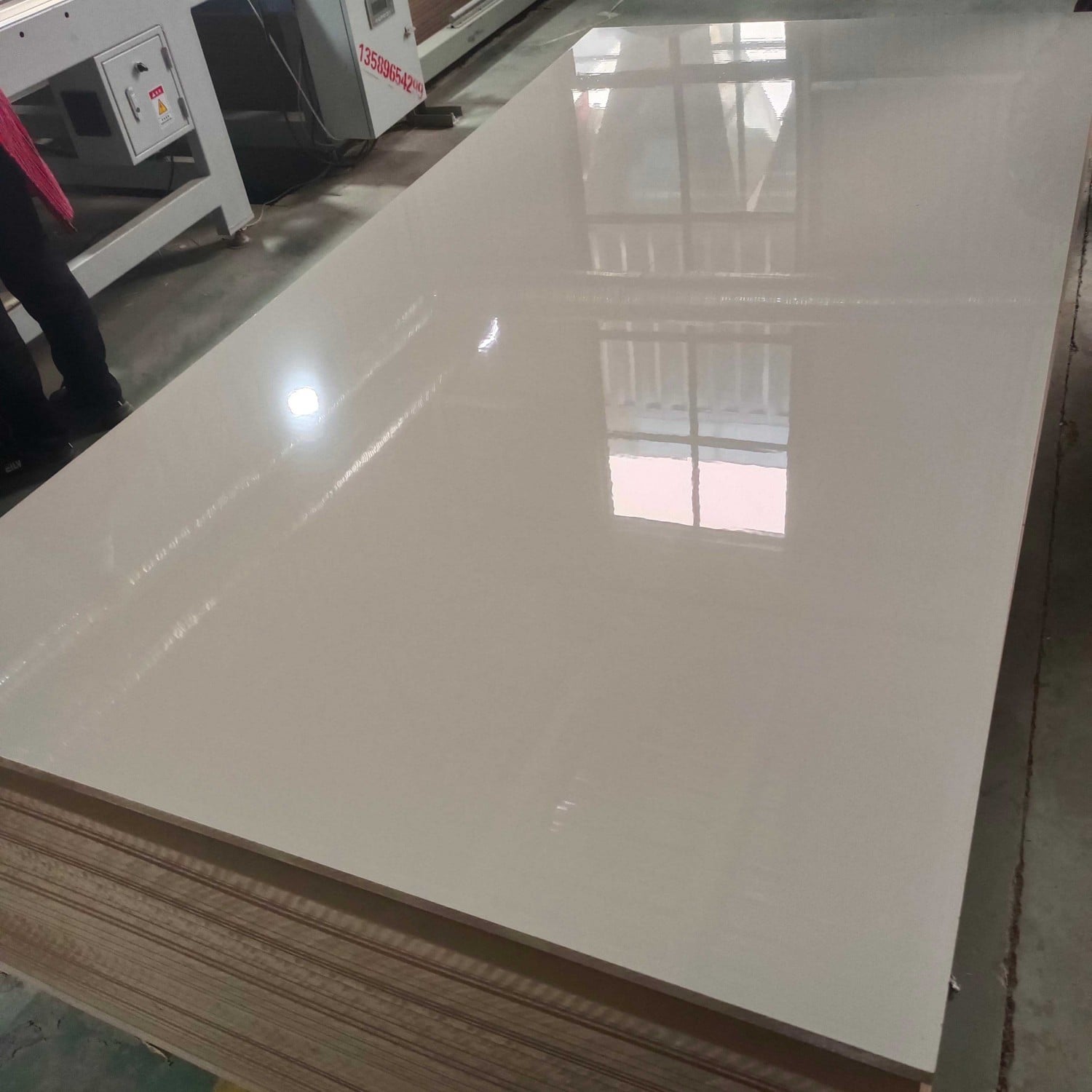
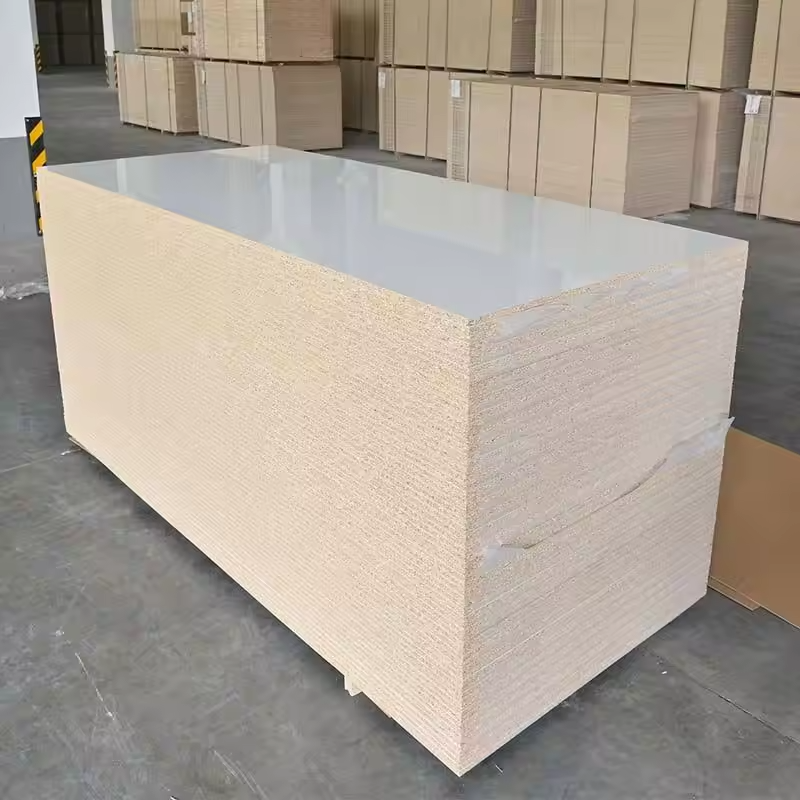
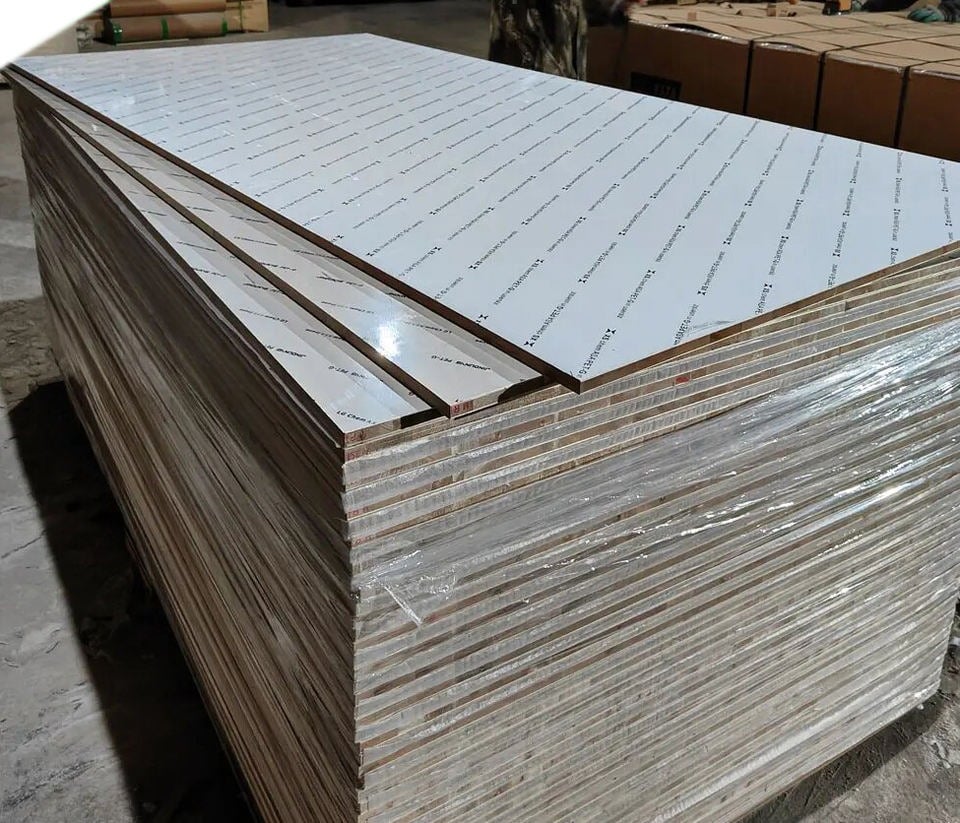
Melamine particle board is one of the most widely used engineered wood panels for wardrobes, kitchen cabinets, office furniture, hotel projects, and retail displays. It consists of wood particles bonded with resin adhesives and finished with decorative melamine paper.
Because the adhesive contains formaldehyde-based resins, every particle board releases a small amount of formaldehyde throughout its service life. To protect indoor air quality, different countries specify maximum emission limits for wood-based panels.
Among the most commonly requested grades in international trade are E1 and E0.
Choosing the appropriate emission grade is not only important for product safety but also affects customs clearance, certification requirements, project approval, and overall purchasing costs.
E0 vs E1 Melamine Particle Board: Quick Comparison
| Item | E1 Grade | E0 Grade |
| Formaldehyde Emission | ≤0.124 mg/m³ | ≤0.06 mg/m³ |
| Indoor Air Quality | Standard | Ultra-low emission |
| Typical Markets | Middle East, Africa, Southeast Asia | EU premium projects, Australia, North America |
| Typical Applications | Wardrobes, office furniture, display cabinets | Children’s furniture, hospitals, schools, premium kitchens |
| Manufacturing Cost | Lower | Higher |
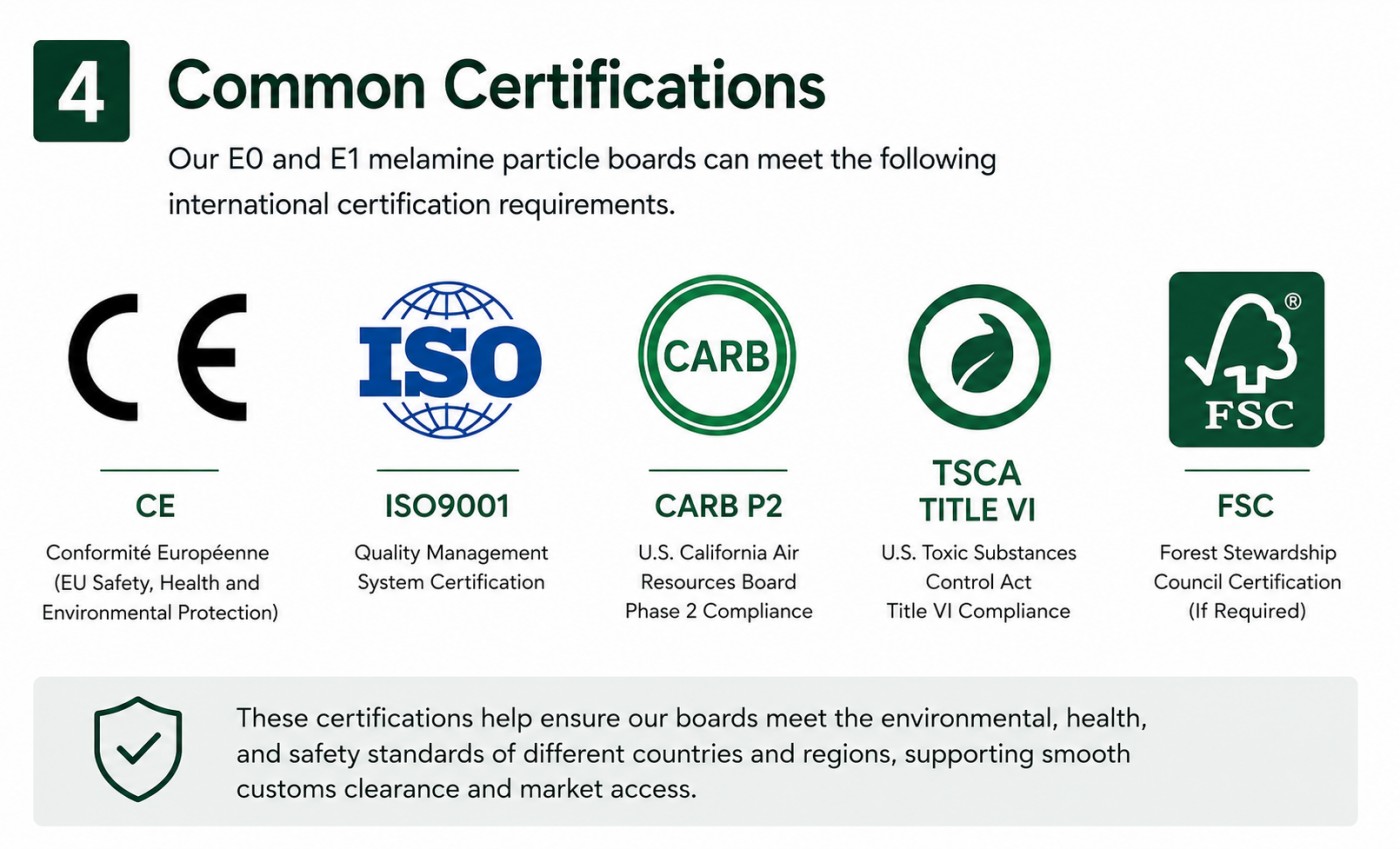
| Available Certifications | CE, ISO9001 | CE, ISO9001, CARB P2, TSCA Title VI, FSC (if required) |
If your products target standard residential or commercial furniture markets, E1 is usually sufficient. If your customers require strict environmental compliance or are supplying public buildings, healthcare facilities, or premium residential projects, E0 is generally the better choice.
Understanding Formaldehyde Emission Standards
One common misconception is that E0 means zero formaldehyde.
In reality, all engineered wood products naturally release trace amounts of formaldehyde because wood itself contains small quantities of this substance.
The difference lies in the emission limit.
Generally speaking:
Depending on the destination country, buyers may also request compliance with standards such as CARB Phase 2, TSCA Title VI, or equivalent local regulations. Before placing an order, importers should always confirm which certification is required by their market.
Middle East
Most residential furniture manufacturers and cabinet suppliers purchase E1 melamine particle board because it offers an excellent balance between cost and compliance.
For large apartment developments and villa projects, E1 remains the most common specification.
Europe
E1 is accepted for many furniture applications. However, premium furniture brands, public procurement projects, and environmentally focused manufacturers often specify lower-emission materials together with additional certification.
Australia and North America
Many importers request products that comply with CARB or TSCA requirements. For these markets, buyers frequently choose E0-grade boards or equivalent low-emission panels to simplify regulatory compliance.
Schools, Hospitals and Children’s Furniture
Projects involving children or healthcare environments generally prioritize the lowest practical formaldehyde emissions. In these situations, E0-grade boards are commonly preferred.
Rather than automatically selecting the highest grade, buyers should evaluate three factors.
1. Target Market Regulations
Always confirm local regulations before production begins. Different countries may require different testing methods or certifications.
2. Project Positioning
Luxury residential kitchens, hotels, schools and hospitals often require higher environmental standards than standard furniture.
3. Budget Considerations
Lower-emission boards require more advanced adhesives and stricter manufacturing control, resulting in higher production costs. Selecting E0 for projects that only require E1 may unnecessarily increase purchasing costs.
The best solution is to match the emission grade with the actual project requirements instead of choosing solely based on price or marketing claims.
Myth 1: E0 Means Zero Formaldehyde
False.
E0 indicates an ultra-low emission level rather than the complete absence of formaldehyde.
Myth 2: E1 Cannot Be Sold in Europe
False.
E1 remains an accepted standard for many furniture applications across Europe. Higher specifications are typically requested only for premium products or specific public projects.
Myth 3: Every Board Labeled “E0” Meets International Standards
Not necessarily.
Responsible buyers should always request third-party laboratory reports rather than relying solely on product labels.
These documents help reduce customs risks and provide greater confidence in product consistency.
For importers, product consistency is often more important than achieving the lowest possible price.
A stable production process, reliable raw materials, and complete quality documentation help reduce warranty claims, customer complaints, and project delays.
At Zhenshijie Wood, we manufacture melamine particle boards for furniture manufacturers, distributors, wholesalers and project contractors worldwide. Both E0 and E1 grades are available in multiple thicknesses and decorative finishes, supported by quality inspection throughout production and export documentation based on customer requirements.
Is E0 always better than E1?
Not necessarily. The appropriate grade depends on your destination market, project requirements, and budget.
Can E1 be exported to Europe?
Yes. Many European furniture manufacturers continue to use E1 boards, although some premium projects require stricter environmental standards.
Does E0 significantly increase product cost?
Generally, yes. Lower-emission adhesives and tighter production control increase manufacturing costs, so buyers should select E0 only when required.
Which grade is recommended for kitchen cabinets?
For premium residential kitchens, especially in markets with strict indoor air quality requirements, E0 is often the preferred choice.
Choosing between E0 and E1 melamine particle board is not simply about selecting the highest specification. The right choice depends on your export market, customer requirements, compliance standards, and project budget.
By understanding formaldehyde emission limits, certification requirements, and application scenarios, buyers can make informed purchasing decisions while maintaining both product quality and cost efficiency.
If you are evaluating melamine particle board for your next furniture project, our technical team can help recommend the most suitable emission grade based on your destination market and application requirements.
 Hot News
2026-10-06
2026-10-02
2026-09-29
Shandong Zhenshijie — China's trusted manufacturer of PET & melamine veneer panels for cabinets, kitchens & furniture. MDF, plywood, particleboard & more — custom sizes, textures & finishes.
located north of Xiaowan Line, Tanyi Town, Feixian County, Linyi City, Shandong Province.
Copyright © 2026 Shandong Zhenshijie International Trade CO,. LTD All rights reserved. Privacy Policy