EN
EN


For high‑end furniture, integrated kitchen cabinets, wardrobes, and commercial space projects, the finish directly determines the final product's appearance. Procurement involves more than just considering the color of the board; texture, feel, color consistency across multiple components, and the ability to consistently reproduce the design in bulk production are all crucial considerations.
Overseas furniture manufacturers and project procurement teams should avoid simply focusing on "which board is best," but rather make judgments based on the project's positioning: is a cool stone texture desired, a warm wood effect, a three‑dimensional synchronized texture, or an artistic ink painting pattern? Different finishes suit completely different spaces.
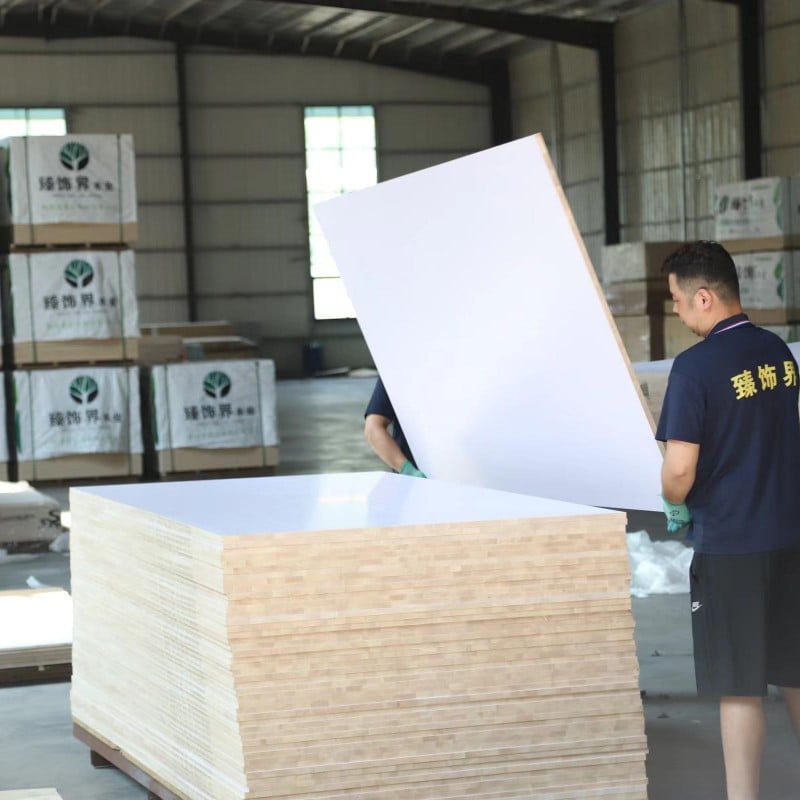
The Zhenshijie high‑end finish series includes four categories: stone texture, ordinary wood grain, synchronized wood grain, and Oriental ink painting, compatible with various substrates such as MDF, particleboard, plywood, and blockboard. Below, from a practical procurement perspective, we outline the applicable scenarios and key procurement points for each finish.
Style Matching Project Positioning:The design requirements for high‑end residences, hotels, and shops differ. Stone textures create a light luxury and modern feel; wood grain brings a warm and natural atmosphere; synchronous wood grain emphasizes the three‑dimensional realism of the touch; ink wash finishes emphasize artistic style and are suitable for differentiated designs.
Texture Uniformity in Mass Production: A project will use various components such as cabinet doors, side panels, shelves, and wall panels. If the texture direction and color difference are not well controlled, the visual disjointedness after assembly will be very strong. Before placing an order, be sure to confirm the color code, texture direction, and front and back requirements, and clarify the sample confirmation process to avoid production defects.
Adaptation to Processing and Export Delivery Conditions: After selecting the finish, you also need to consider the actual production processes such as material cutting, edge banding, drilling, and long‑distance transportation. Confirm the base material, board thickness, and edge banding scheme. For export orders, finalize the testing documents, packaging standards, and delivery cycle in advance.
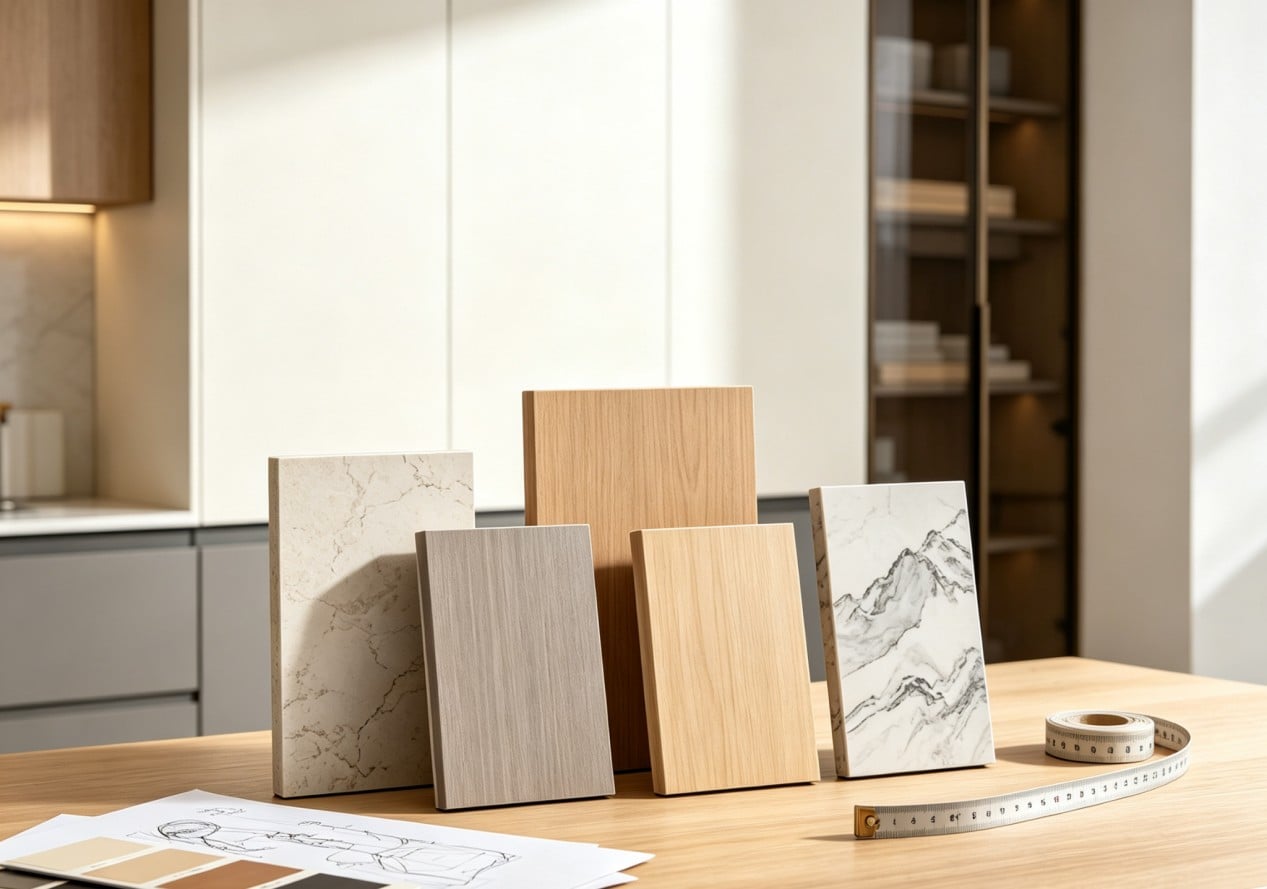
Stone Texture Finishes
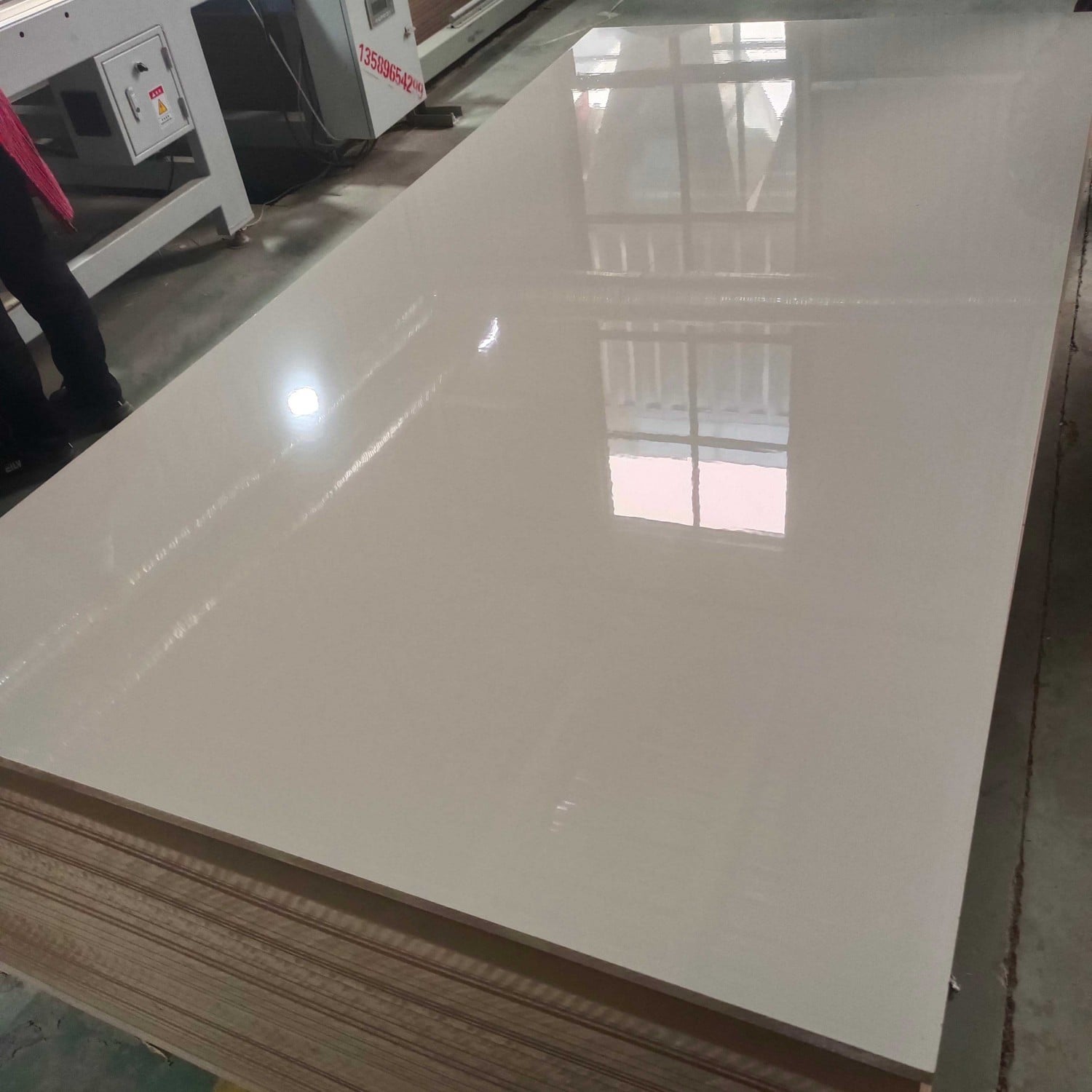
Replicating the visual effect of marble and sintered stone, these finishes are easier to coordinate with cabinets, doors, and walls compared to natural stone.
Suitable for: High‑end kitchen island cabinets, hotel and club feature walls, and minimalist luxury TV cabinets and display cases, used to create a visual focal point in the space. Purchasing considerations: Texture layering, large‑area splicing effect, base material thickness, and color difference control between samples and bulk orders.
Wood Grain Veneer: The most widely used finish, suitable for most styles including Scandinavian and modern minimalist. Overseas furniture brands often use it to create multiple differentiated product lines. Suitable for: wardrobes, bookcases, hotel room furniture, whole‑house renovation projects, and products that want the look of natural wood but want to reduce procurement and maintenance costs. Procurement focus: whether the wood grain direction matches the furniture structure, control the grain connection between different boards, and confirm color difference standards in advance.
Synchronous Wood Grain Veneer: The surface texture and embossing depth correspond one‑to‑one, achieving "looks like wood, and feels like wood grain to the touch," enhancing the product's quality. Often used for cabinet doors, feature walls, and other components that are in close contact with the furniture. Suitable for: high‑end whole‑house customization, showrooms, boutique hotels, and furniture series that emphasize the authentic feel of the material. Procurement focus: texture depth, edge banding effect, and evaluating the presentation after large‑area splicing.
Oriental Poetic Ink Painting Veneer: Emphasizes the artistic conception and negative space; not suitable for full‑house application, but better suited as a local visual highlight. Suitable for: Boutique hotels, tea rooms, studies, and high‑end clubs, creating unique brand memory points. Purchasing considerations: Pattern proportions, panel splicing effect; a physical sample must be confirmed first to avoid significant discrepancies between the actual product and the design draft.
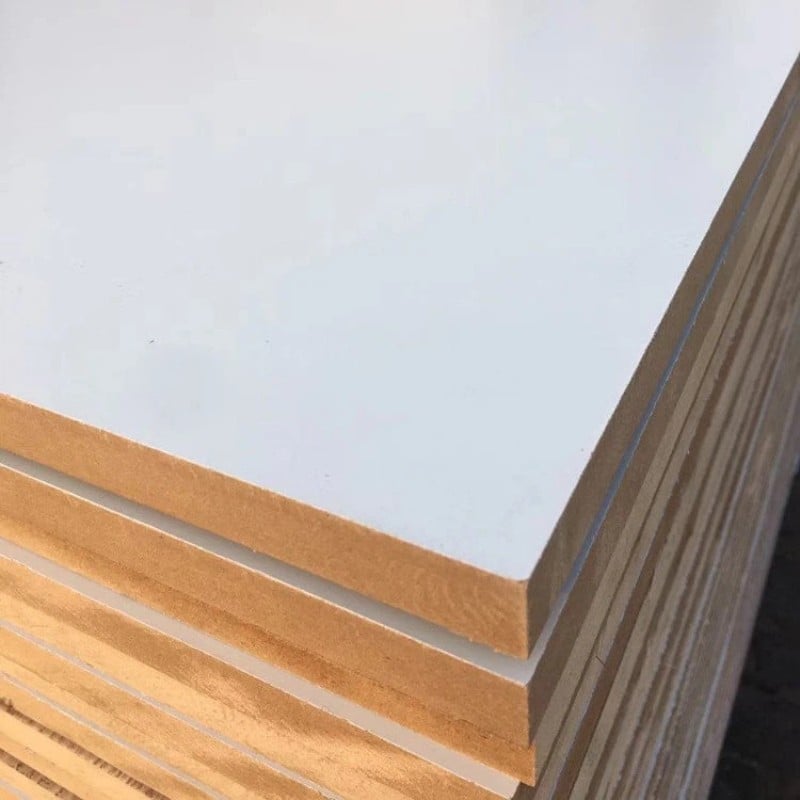
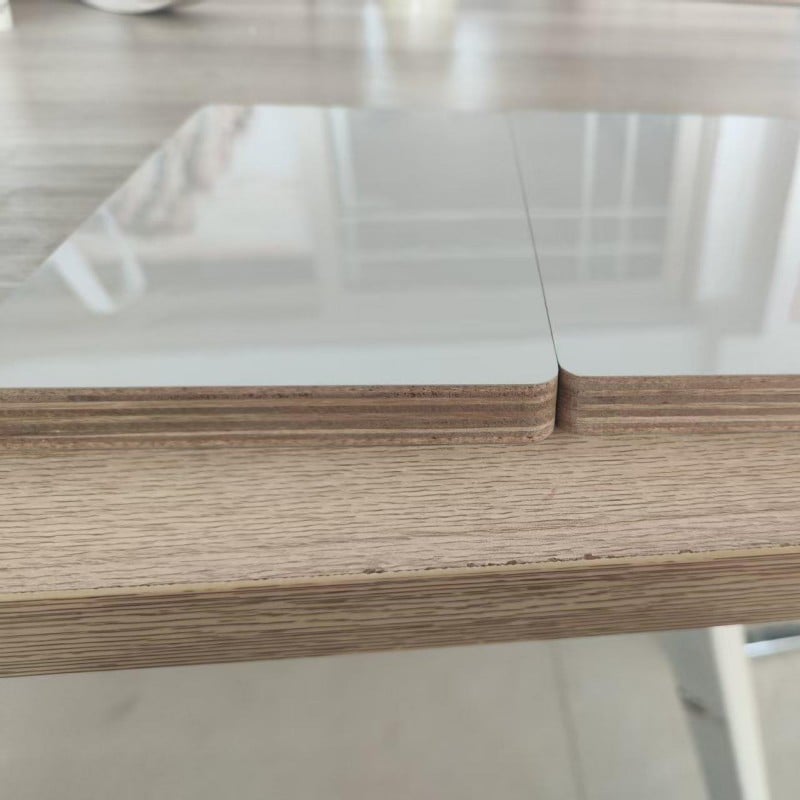
The final finish effect is inseparable from the support of the substrate. The same surface finish applied to MDF, particleboard, and plywood will result in significant differences in processing performance and structural appearance.
| Project Requirement | Preferred Finish | Procurement Priorities |
| Modern luxury with stone texture | Stone‑grain finish | Seam matching effect, substrate thickness |
| Natural warm wood feel | Wood‑grain finish | Grain direction, batch color variation |
| Three‑dimensional realistic touch | Synchronized wood‑grain finish | Embossing depth, edge‑banding processing |
| Art/cultural theme | Oriental poetic ink‑wash finish | Pattern proportion, prioritize small‑scale trial |
1. Project Type and Design Style; 2. Selected Finish Type; 3. Which Furniture Components Will It Be Used In; 4. Substrate Preference; 5. Board Size and Quantity; 6. Whether Cutting and Edge Banding are Required; 7. Sample Confirmation Requirements; 8. Destination Port, Packaging, and Delivery Date.
The more complete the information, the better the factory can provide a complete solution tailored to the project, reducing repeated communication.
Conclusion: There are no absolutely good or bad stone, wood, synchronous wood, or ink wash finishes, only suitability. The actual selection order is: first, determine the space positioning and select the finish style; then, consider the matching substrate for the components; finally, finalize the specifications, processing, samples, and delivery date. This approach can effectively reduce various problems associated with mass production.
If you are preparing for cabinet, wardrobe, hotel, or commercial space projects, we can provide design references, board specifications, and purchase quantities. Zhenshijie Wood can match you with corresponding finish and substrate solutions and provide sample testing.
 Hot News
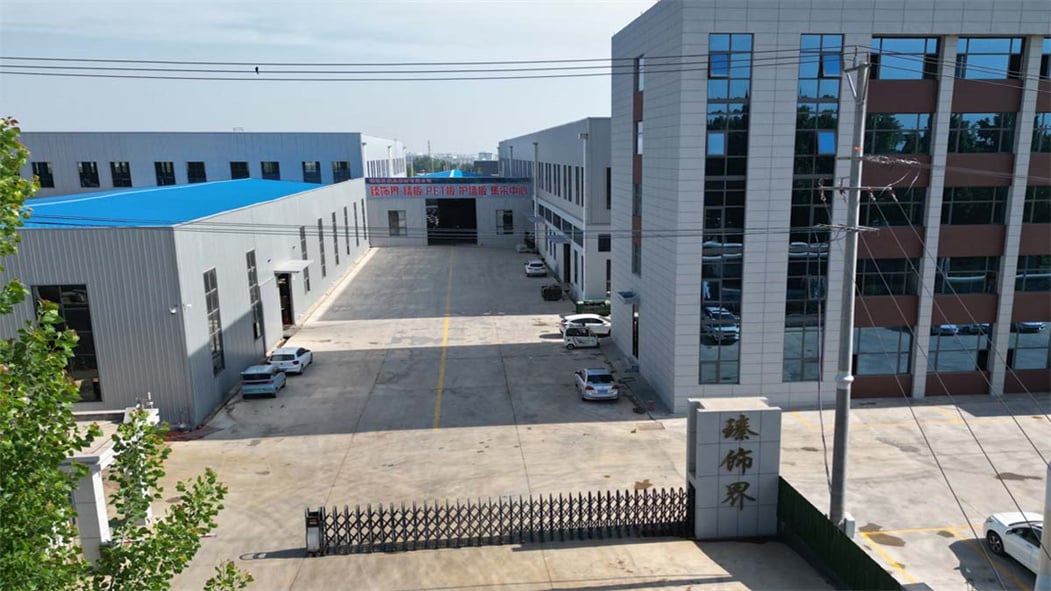
Shandong Zhenshijie — China's trusted manufacturer of PET & melamine veneer panels for cabinets, kitchens & furniture. MDF, plywood, particleboard & more — custom sizes, textures & finishes.
located north of Xiaowan Line, Tanyi Town, Feixian County, Linyi City, Shandong Province.
Copyright © 2026 Shandong Zhenshijie International Trade CO,. LTD All rights reserved. Privacy Policy