EN
EN


When importing decorative boards for kitchen cabinets, hotel wardrobes or largescale walldecoration projects, many buyers keep asking themselves: for bulk orders, does synchronized melamine board deliver better value compared with natural wood veneer? We hear this question frequently from furniture factories and trade contractors across global markets every year.
Both materials are widely used within the global furniture sector, yet they differ quite a lot in texture, structural stability, production cost, maintenance work and exportfit practicality. Quite a number of importers make material decisions based only on surface appearance. They tend to overlook hidden aftersales losses caused by poor material selection.
Below is a realworld comparison prepared by Zhenshijie Wood. We walk through key practical factors so you can pick suitable boards, protect your profit and reduce avoidable customer complaints.
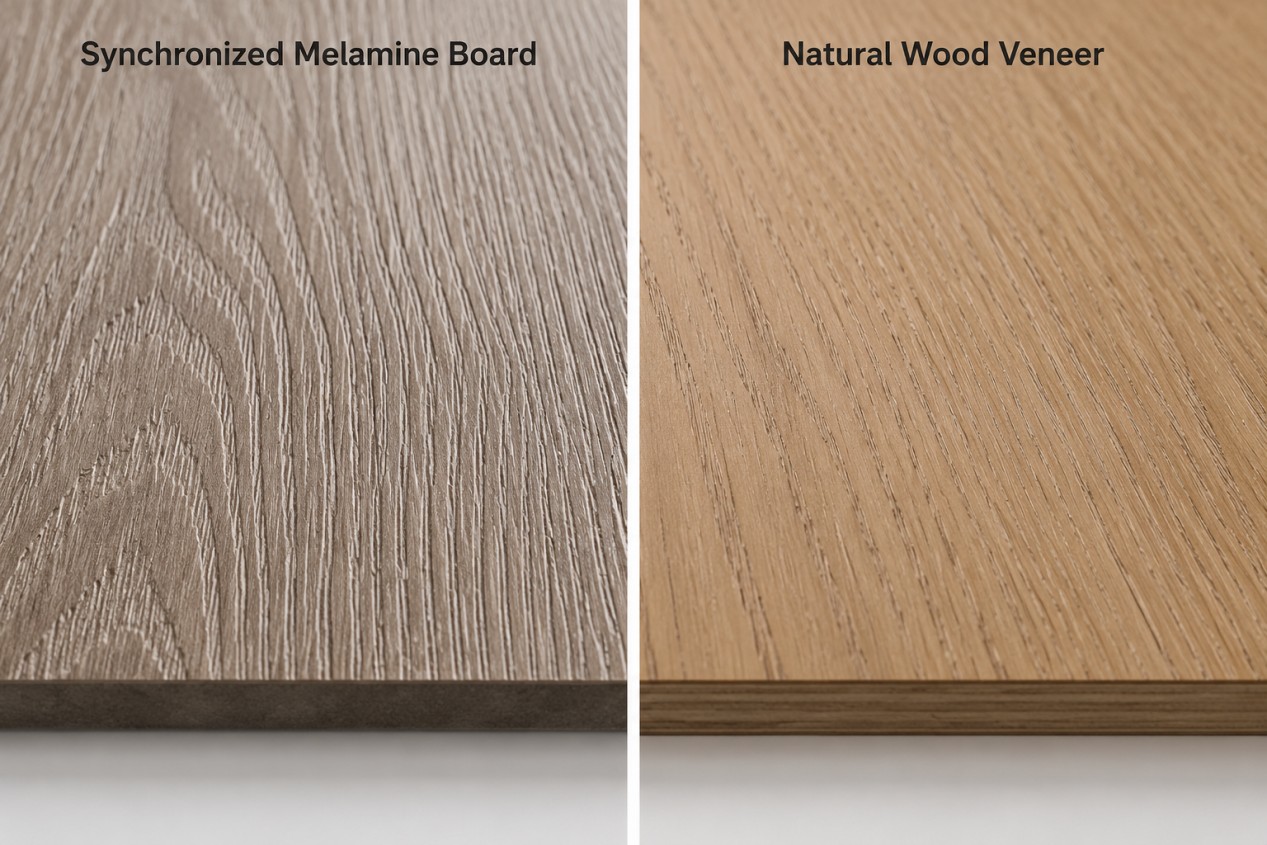
1. Visual & Tactile Texture: Uniform Mass Production Vs Unique Natural Grain
Natural wood veneer is produced by slicing solid logs such as oak, walnut, ash or teak, then gluing those thin sheets onto base boards. It delivers distinctive natural grain, organic knots and gentle color gradients. This makes it a great option for custom luxury villas and highend fivestar hotel lobby projects.
Its main drawback is pattern inconsistency. Each veneer sheet carries its own grain and color variations. When producing fullhouse cabinets or large wall boards, your factory team will spend extra labor time sorting and matching sheets. Color or grain mismatches can easily trigger product returns and leave you with deadstock inventory.
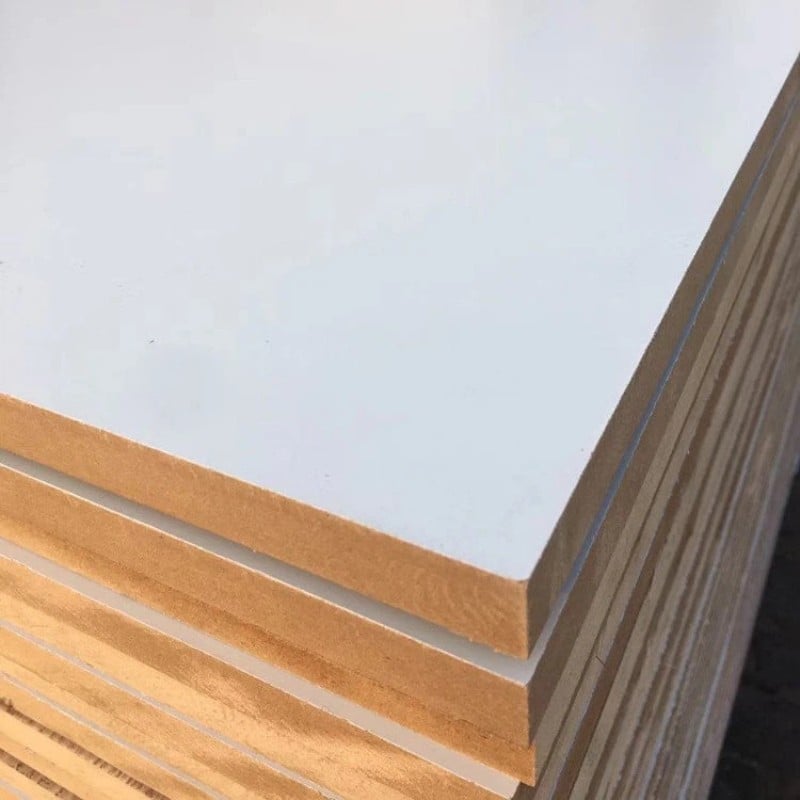
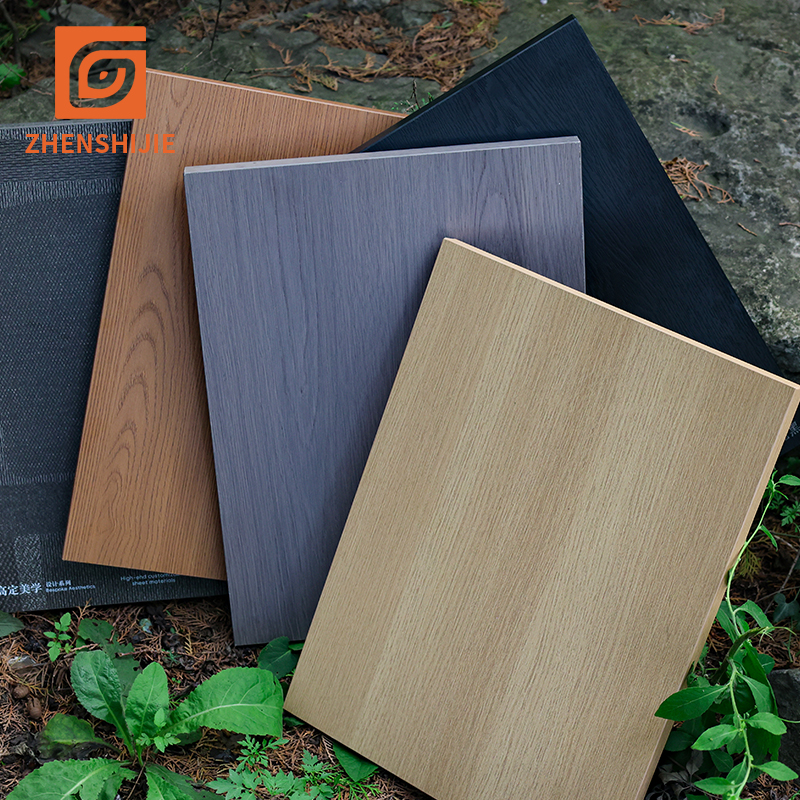
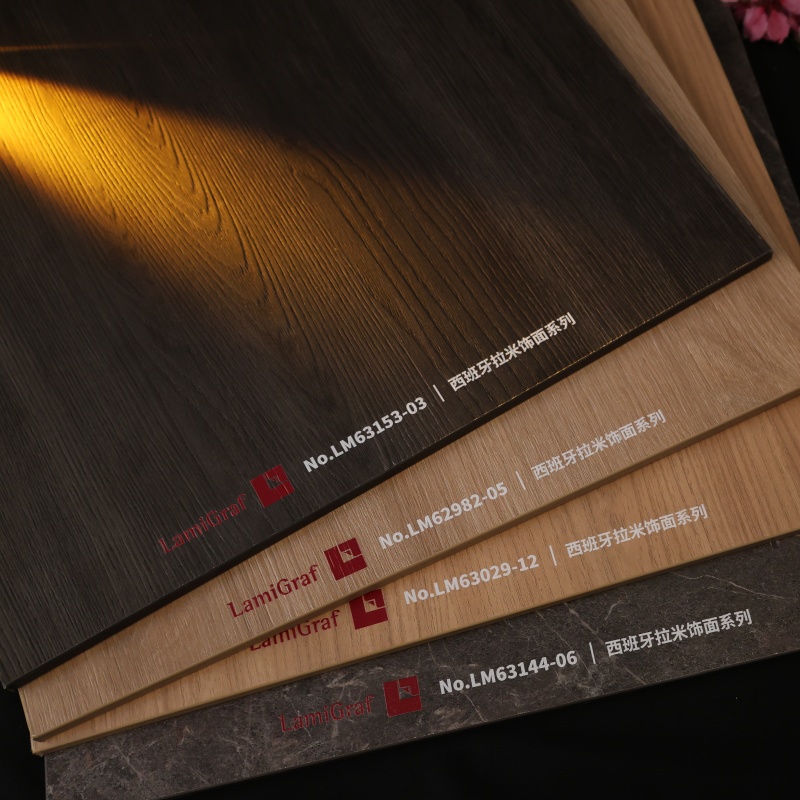
Our upgraded 2026 synchronized melamine board applies onetoone synchronized embossing technology. Printed wood grain aligns precisely with surface concaveconvex texture, creating a handfeel close to real solid timber. Every board goes through unified color calibration, minimizing batchtobatch color shift and uneven grain.
Pattern selections cover oak, walnut, ash and marble designs, matching popular styles including minimalist, lightluxury, Nordic and industrial for Europe, the Middle East and Southeast Asia. For highvolume production lines, synchronized melamine boards help cut material waste and shorten manufacturing cycles. You can explore our full product range of synchronized melamine MDF boards.
2. Longterm Stability & Maintenance Needs
Natural wood veneer reacts sensitively to temperature and humidity swings. In humid coastal areas, veneer edges absorb moisture and may blister or peel within one to two years. In hotdry regions such as the Middle East, direct sunlight will quickly crack and fade veneer surfaces. End customers need routine wax polishing to keep the veneer looking good. This creates extra aftersales workload for furniture suppliers.
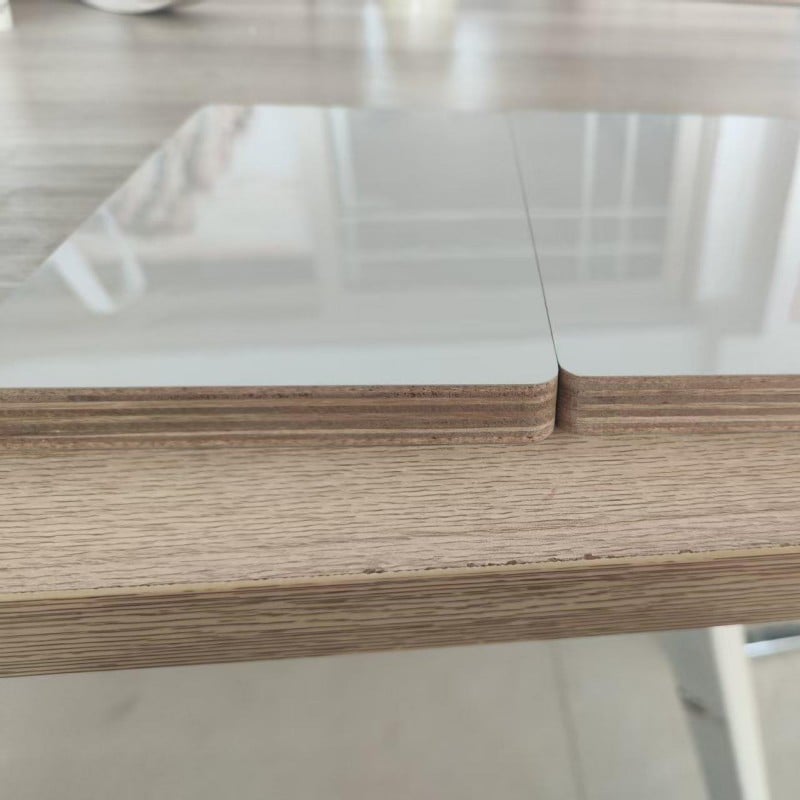
Synchronized melamine boards are manufactured by hotpressing dense, wearresistant melamine resin film onto substrates. The fully sealed surface works well against water damage, oil stains and UV fading. Kitchen grease, coffee spills and dust can simply be wiped away using a damp microfiber cloth; no special maintenance products are required.
We use E0grade lowformaldehyde glue on all substrates to lower risks of edge moisture swelling. Whether fitted for dampenvironment bathroom cabinets, heavyuse kitchen units or hightraffic office storage, these boards can hold stable performance for more than 10 years.
3. Material Cost, Production Lead Time & Export Benefits
Natural wood veneer costs 40%‑70% higher than synchronized melamine boards. On top of higher rawmaterial costs, veneer needs extra processing steps such as painting, edgesealing and antifade treatment. These steps add a minimum of 30% to total production time and labor expense.
For export orders with tight container deadlines, production delays often lead to shipment rescheduling and unexpected extra logistics costs.
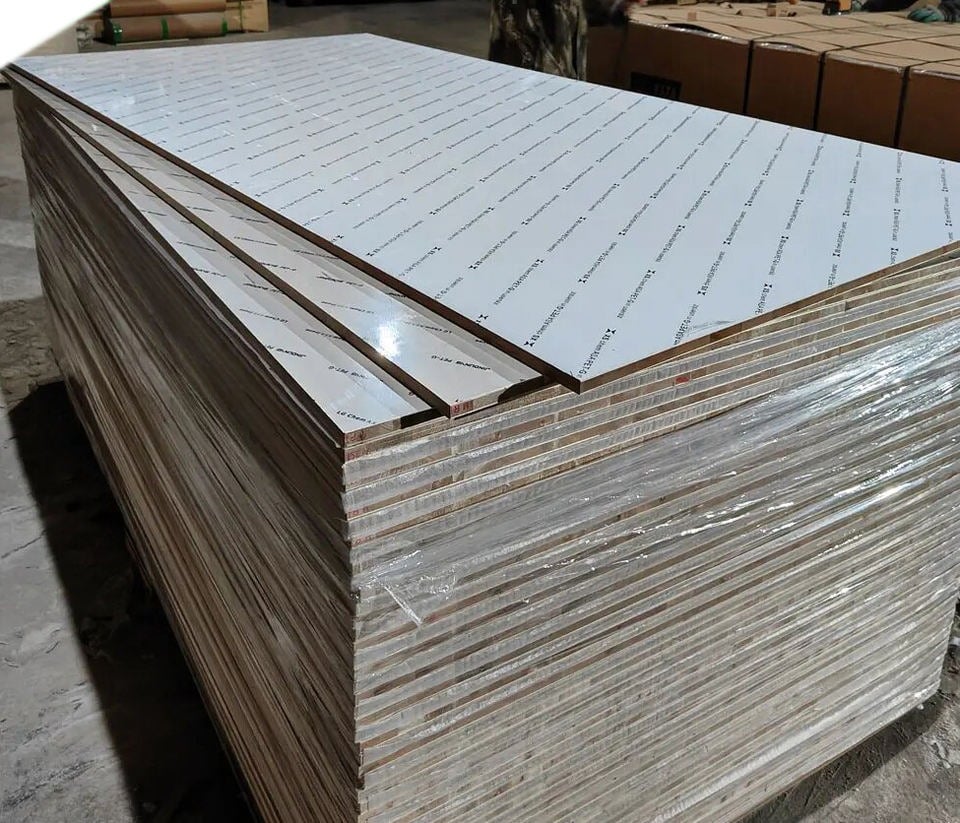
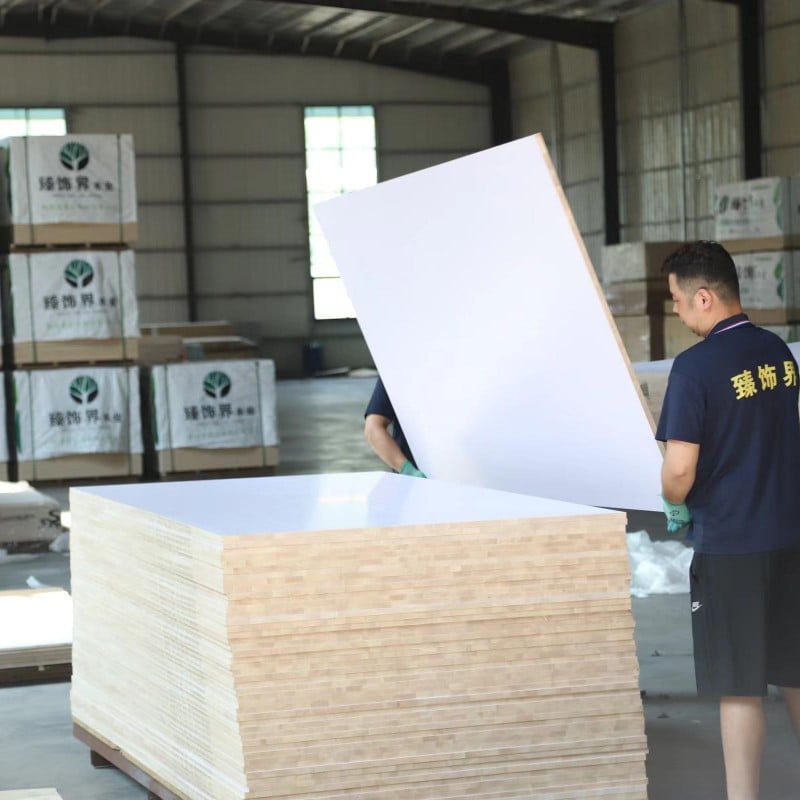
Synchronized melamine boards come factoryfinished. You can carry out cutting, edgebanding and direct assembly with no secondary painting work needed. Standardsize boards (1220×2440 mm) are kept in stock, while custom extralong 2800 mm boards are available for cabinet and wallboard projects.
Supported by steady rawmaterial supplies, we can complete full 40HQ container bulk orders within 7‑10 working days. Stable color performance across batches reduces risks during customs inspection and streamlines crossborder clearance for international importers.
4. Best Use Cases For Each Board Type
Natural Wood Veneer
Best suited for smallbatch, highbudget projects: custom fullhouse furniture for luxury villas, premium hotel lobby decor, highvalue retail display counters. This material fits clients who prioritize authentic naturalwood texture and are prepared for higher production and ongoing maintenance costs.
Synchronized Melamine Board
Wellmatched for largescale export and wholesale businesses: standard kitchen cabinet sets, hotel guestroom wardrobes, office storage units, large wall boards and chainstore retail displays. It balances realistic woodgrain texture, consistent quality and competitive factory pricing for mediumtolargevolume import operations.
Final Sourcing Advice For Global Importers
If your business focuses on highvolume furniture exports and midrange commercial interior projects, synchronized melamine boards will support better profit margins while cutting down aftersales troubles.
Zhenshijie Wood offers a complete product lineup of synchronized melamine MDF, particleboard and plywood. All items hold E0 / E1 formaldehyde certifications and satisfy import compliance requirements for EU and NorthAmerican markets.
 Hot News
2026-10-06
2026-10-02
2026-09-29
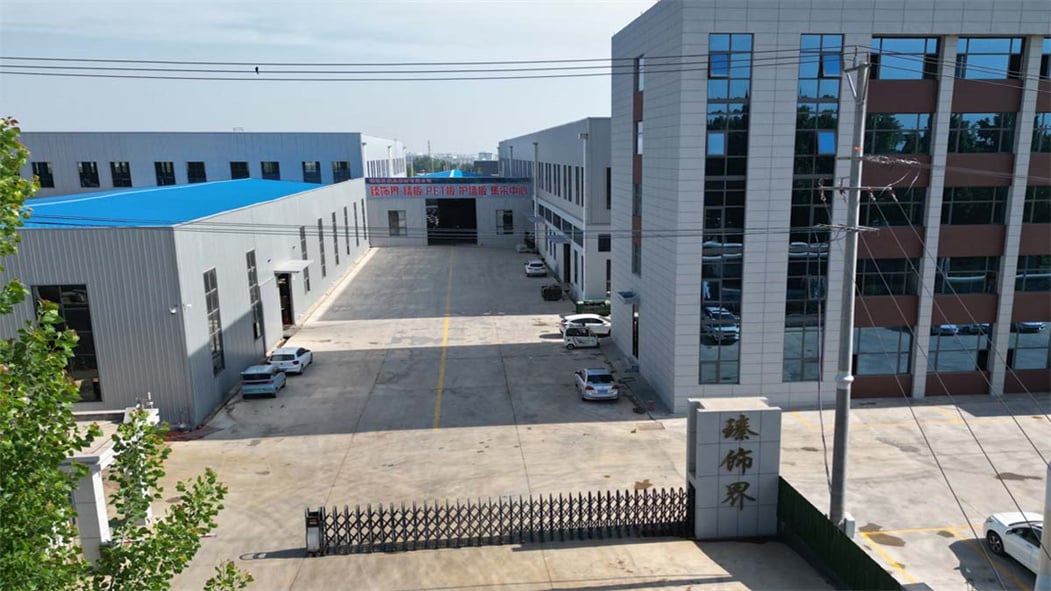
Shandong Zhenshijie — China's trusted manufacturer of PET & melamine veneer panels for cabinets, kitchens & furniture. MDF, plywood, particleboard & more — custom sizes, textures & finishes.
located north of Xiaowan Line, Tanyi Town, Feixian County, Linyi City, Shandong Province.
Copyright © 2026 Shandong Zhenshijie International Trade CO,. LTD All rights reserved. Privacy Policy