 EN
EN

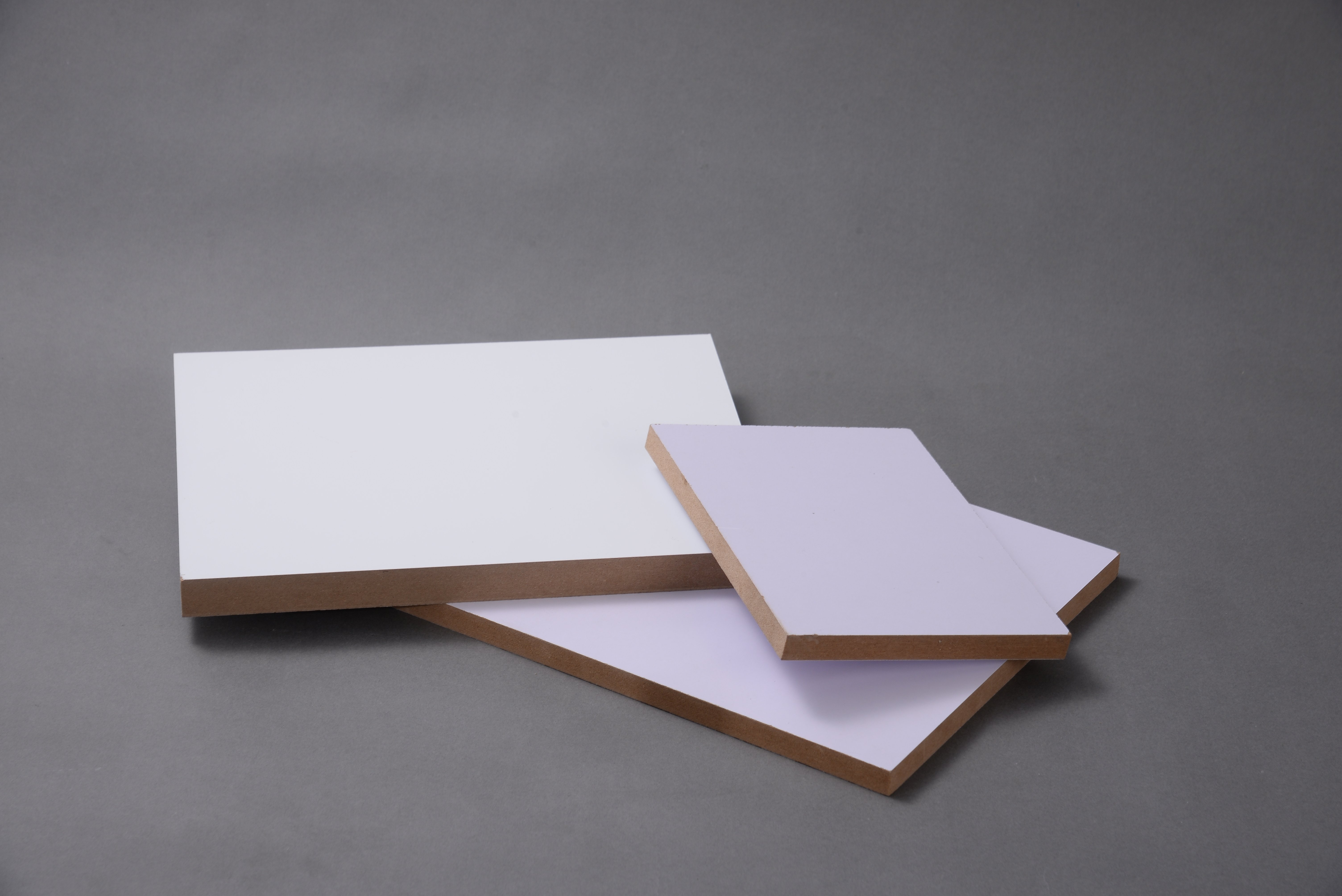
When manufacturers, furniture designers, and cabinet makers evaluate engineered wood options, surface quality consistently ranks among the top decision factors. mdf material has earned a strong reputation in this regard, delivering a consistently flat, uniform surface that outperforms many natural wood alternatives in finishing applications. Understanding exactly how mdf material achieves this level of smoothness helps buyers and specifiers make more confident procurement decisions.
The answer lies in both the raw material composition and the manufacturing process that transforms loose wood fibers into a dense, homogeneous panel. Unlike solid timber, which carries natural grain variations, knots, and porous inconsistencies, mdf material is engineered from the ground up to eliminate those irregularities. Every stage of production — from fiber preparation to pressing — is designed with surface uniformity as a core outcome, making mdf material a preferred substrate for paint, veneer, laminate, and other decorative finishes across furniture, cabinetry, and interior applications.
The Role of Fiber Composition in Surface Quality
How Wood Fiber Refinement Creates a Uniform Base
The foundation of mdf material's smooth surface begins at the fiber stage. Raw wood chips or plant-based fibers are subjected to high-temperature steam treatment, which softens the lignin bonds holding the wood cells together. This process, known as defibration, breaks the raw material down into individual fibers rather than coarse particles or chips. The result is a fine, consistent fiber mass that forms the structural backbone of mdf material.
Because the fibers are refined to a uniform size and texture, there are no large voids, splinters, or grain discontinuities within the panel matrix. When these fibers are later compressed and bonded, they interlock tightly, leaving minimal surface porosity. This is fundamentally different from particleboard, where coarser particles create a rougher, more porous surface that requires heavier filling before finishing.
The fineness of the fiber also means that mdf material can be machined — routed, profiled, or shaped — without tearing or splintering at the edges. This edge integrity is a direct extension of the same fiber uniformity that produces a smooth face surface, making mdf material highly versatile for decorative millwork and detailed furniture components.
Resin Bonding and Its Effect on Surface Density
Alongside fiber quality, the resin system used in mdf material plays a critical role in surface smoothness. Urea-formaldehyde or alternative low-emission resins are blended thoroughly with the refined fibers before pressing. The resin acts as a binder that fills the microscopic spaces between fibers, creating a dense, consolidated matrix throughout the panel thickness.
Higher resin content at the surface layers of mdf material contributes directly to a harder, denser face. This surface density means that when the panel is sanded or finished, the face presents a tight, closed structure rather than an open, absorbent one. Paint and primer adhere more evenly, and the risk of bleed-through or uneven absorption is significantly reduced.
The resin distribution in quality mdf material is carefully controlled during blending to ensure consistency across the entire panel. Uneven resin distribution would create soft spots or density variations that would show through surface finishes, so manufacturers invest in precise blending technology to maintain the surface quality that mdf material is known for.
The Manufacturing Press Process and Surface Formation
How Heat and Pressure Consolidate the Panel Surface
Once the fiber-resin blend is formed into a mat, it enters a continuous or multi-daylight hot press. The combination of heat and pressure applied during this stage is what physically creates the smooth, hard surface characteristic of mdf material. Temperatures typically range between 160°C and 220°C, activating the resin and causing it to cure while the fibers are compressed to their final density.
The press platens used in mdf material production are precision-ground steel surfaces. Their flatness is transferred directly to the panel face during pressing, which is why mdf material emerges from the press with a naturally smooth, flat surface that requires minimal additional processing. The higher the platen quality and the more controlled the pressing parameters, the more consistent the surface finish across the full panel area.
This pressed surface is significantly harder than the panel core, a property known as the 'skin effect.' The dense skin of mdf material resists minor abrasion and provides an ideal base for downstream finishing operations. It is this skin that painters, lacquer applicators, and laminate bonding specialists rely on when working with mdf material in high-quality furniture production.
Sanding and Calibration After Pressing
After pressing, mdf material panels go through a calibration and sanding process that refines the surface to precise thickness tolerances and removes any minor surface irregularities introduced during pressing. Industrial wide-belt sanders equipped with fine-grit abrasives are used to achieve a consistent surface roughness value across the entire panel.
This sanding stage is not merely cosmetic. It ensures that the surface of mdf material meets the flatness and smoothness specifications required for direct lamination, painting, or veneer application. Panels that are not properly calibrated would cause adhesive spread inconsistencies during lamination, leading to bonding failures or visible surface defects in the finished product.
The calibration process also ensures that mdf material panels are dimensionally consistent from batch to batch, which is important for industrial furniture production where panels are processed on automated machinery. Consistent thickness and surface smoothness reduce machine setup time and improve yield rates in high-volume manufacturing environments.
Surface Smoothness Advantages in Finishing Applications
Paint and Lacquer Performance on MDF Material
One of the most valued properties of mdf material in furniture and cabinetry manufacturing is its exceptional response to paint and lacquer finishes. Because the surface is dense and non-porous, primer coats are absorbed evenly without the blotching or grain raise that occurs on solid wood. This means fewer coats are needed to achieve a high-gloss or satin finish, reducing material consumption and production time.
For kitchen cabinet doors, retail display units, and interior architectural elements, the ability of mdf material to hold a perfectly flat painted surface is a significant competitive advantage. High-gloss lacquer finishes, in particular, demand an extremely smooth substrate because any surface irregularity is amplified under reflective coatings. Mdf material consistently meets this requirement in ways that solid wood or lower-grade engineered panels cannot.
The smooth surface of mdf material also supports water-based and UV-cured coatings, which are increasingly preferred for their lower VOC emissions and faster curing times. These coatings bond well to the dense face of mdf material, producing durable, aesthetically consistent results that meet the quality expectations of both residential and commercial furniture buyers.
Laminate and Veneer Bonding on MDF Material
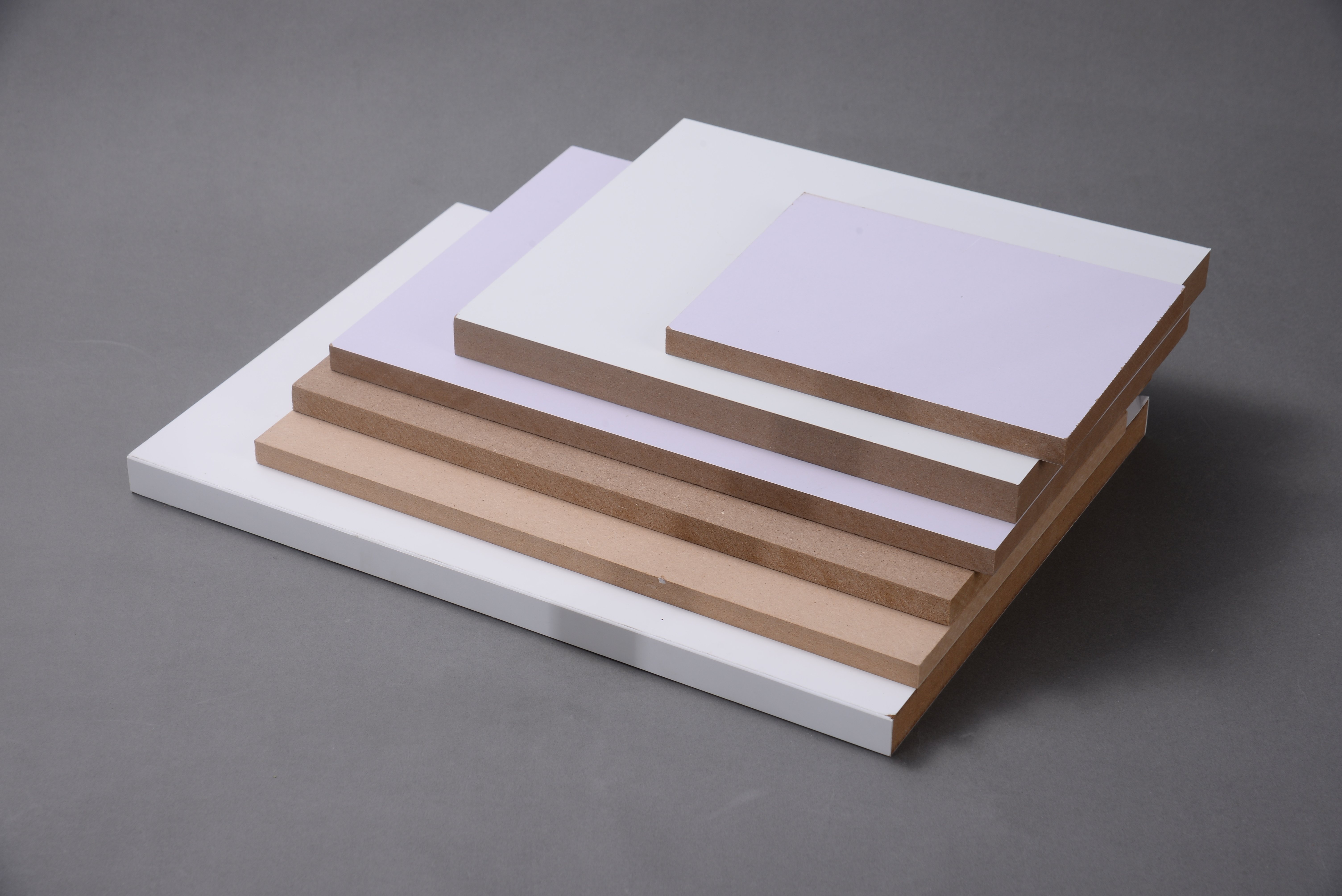
Melamine paper lamination is one of the most common surface treatments applied to mdf material, particularly for kitchen boards, furniture panels, and packaging boards. The smooth, flat surface of mdf material ensures full contact between the laminate and the substrate during hot pressing, which is essential for achieving a strong, void-free bond.
Any surface roughness or waviness in the substrate would create areas of incomplete adhesive contact, leading to delamination over time, especially in environments with humidity fluctuations. The consistent surface density of mdf material minimizes this risk, making it a reliable substrate for both thin decorative papers and thicker high-pressure laminates.
Natural wood veneer application also benefits from the smooth surface of mdf material. Veneer sheets, which are often less than 0.6mm thick, will telegraph any substrate irregularity through to the visible face. The flat, uniform surface of mdf material prevents this telegraphing effect, allowing the veneer's natural grain and figure to be displayed without distortion — a quality outcome that is difficult to achieve on rougher substrates.
Practical Considerations for Specifying MDF Material by Surface Grade
Understanding Surface Grade Variations in MDF Material
Not all mdf material is produced to the same surface quality standard. Manufacturers typically offer different grades based on the intended application, with surface smoothness being one of the primary differentiating factors. Standard-grade mdf material is suitable for applications where the surface will be covered with thicker laminates or where the finish quality requirements are moderate.
Premium or 'ultra-light' grades of mdf material are produced with finer fiber refinement, higher surface density, and tighter sanding tolerances. These grades are specified for high-gloss painted finishes, thin veneer applications, and precision-routed decorative profiles where surface quality is critical to the final product's appearance and market positioning.
When specifying mdf material for a project, it is important to align the surface grade with the finishing process. Over-specifying surface quality adds unnecessary cost, while under-specifying can result in finishing defects that require rework or rejection. Working with a knowledgeable supplier to match mdf material grade to application requirements is a practical step that improves both quality outcomes and cost efficiency.
Moisture Resistance and Its Relationship to Surface Integrity
Standard mdf material is not inherently moisture-resistant, and exposure to high humidity can cause the panel to swell, which disrupts the smooth surface and compromises any applied finish. For applications in kitchens, bathrooms, or other humid environments, moisture-resistant mdf material — often identified by a green core color — is the appropriate specification.
Moisture-resistant mdf material incorporates hydrophobic additives into the fiber-resin blend, which reduce water absorption and limit thickness swelling under humid conditions. This preserves the surface integrity of the panel over time, ensuring that the smooth finish remains stable and that laminates or coatings do not lift or bubble due to substrate movement.
Specifying the correct moisture resistance level for mdf material is as important as specifying the correct surface grade. A panel with excellent surface smoothness that swells in service will ultimately fail to deliver the quality outcome that the smooth surface was intended to support. Matching both surface grade and moisture resistance to the end-use environment is the complete specification approach for mdf material.
FAQ
Why does mdf material produce a smoother surface than solid wood?
Mdf material is manufactured from refined wood fibers that are uniformly blended with resin and compressed under heat and pressure. This process eliminates the grain variations, knots, and porous inconsistencies found in solid wood, resulting in a dense, homogeneous panel surface that is inherently smoother and more consistent than natural timber.
Is mdf material suitable for high-gloss painted finishes?
Yes, mdf material is widely regarded as one of the best substrates for high-gloss painted finishes. Its dense, non-porous surface absorbs primer evenly and provides a flat base that does not telegraph grain or texture through reflective coatings. Premium-grade mdf material is specifically produced for this application and is commonly used in high-end kitchen cabinet doors and interior architectural elements.
How does the pressing process in mdf material production affect surface quality?
During hot pressing, precision-ground steel platens transfer their flatness directly to the panel face while heat and pressure cure the resin and consolidate the fibers. This creates a hard, dense surface skin on the mdf material that is naturally smooth and requires only light sanding to achieve finishing-ready quality. The pressing parameters — temperature, pressure, and duration — are carefully controlled to ensure consistent surface quality across every panel.
What surface grade of mdf material should be specified for veneer application?
For natural wood veneer application, premium or high-density surface grade mdf material is recommended. Thin veneer sheets will telegraph any substrate irregularity through to the visible face, so the substrate must be as flat and smooth as possible. Premium mdf material with tight sanding tolerances and high surface density provides the ideal base for veneer bonding without distortion or telegraphing effects.