 EN
EN

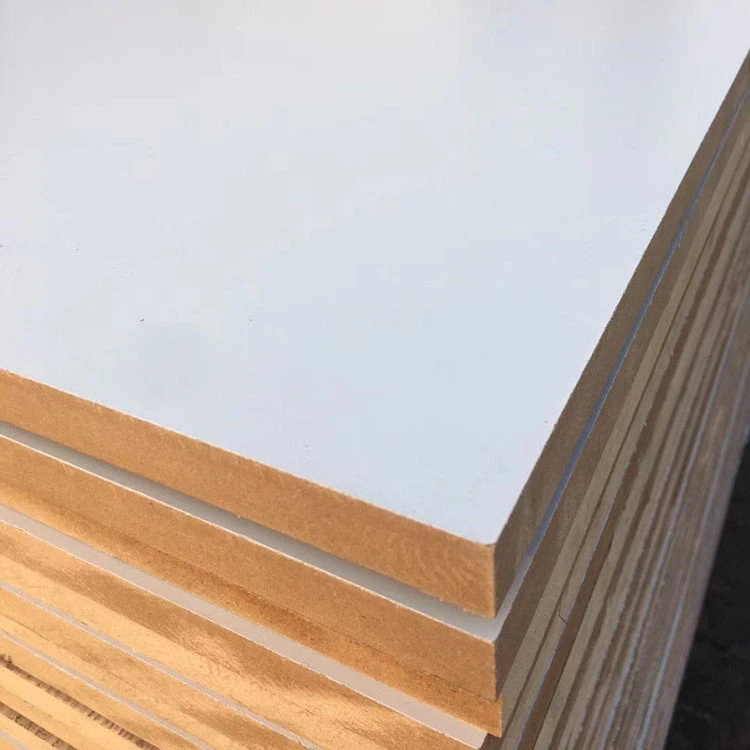
When selecting a substrate for decorative panels, the choice of core material has a direct impact on surface finish quality, dimensional stability, and long-term performance. mdf material has become one of the most widely discussed options in this context, particularly in interior design, furniture manufacturing, and architectural millwork. Its smooth, uniform surface and consistent density profile make it a compelling candidate for applications where aesthetics and precision matter most.
The short answer is yes — mdf material is genuinely suitable for decorative panels, and in many scenarios it outperforms alternatives such as solid wood or particleboard. However, suitability depends on the specific application environment, the type of decorative finish being applied, and how the panels will be installed and maintained. This article examines the key reasons why mdf material works well for decorative purposes, where its strengths are most evident, and what conditions require careful consideration before specifying it.
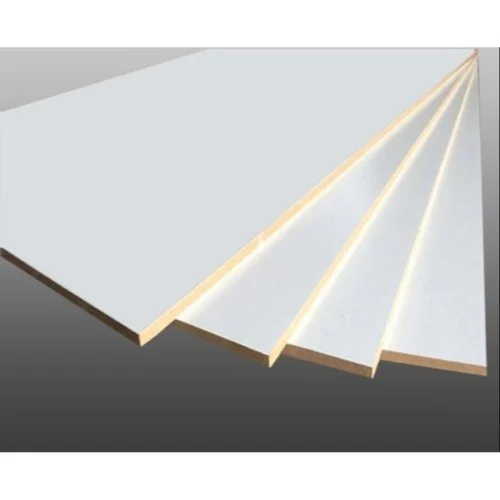
Understanding What Makes MDF Material Appropriate for Decorative Use
The Structural Composition Behind Its Surface Quality
mdf material is manufactured by breaking down wood residuals or other plant-based fibers into fine particles, combining them with resin binders, and pressing the mixture under high heat and pressure. This process eliminates the grain irregularities, knots, and voids that are common in natural wood. The result is a panel with a highly uniform internal structure and an exceptionally flat, smooth surface on both faces.
For decorative panel applications, surface smoothness is not a cosmetic luxury — it is a functional requirement. Whether the finish involves paint, veneer, laminate, or printed film, the substrate must be free of surface defects that would telegraph through the decorative layer. mdf material provides this level of surface consistency reliably and at scale, which is why it has become a preferred substrate in high-volume decorative panel production.
The density uniformity of mdf material also means that machining operations such as routing, profiling, and edge shaping produce clean, precise results. Decorative panels often require intricate edge profiles or routed surface patterns, and mdf material holds these details without chipping or tearing, which is a significant advantage over lower-density alternatives.
Compatibility with a Wide Range of Decorative Finishes
One of the most practical reasons mdf material is favored for decorative panels is its broad compatibility with surface finishing systems. It accepts paint exceptionally well, particularly when a primer coat is applied first to seal the surface. The result is a smooth, even paint finish that is difficult to achieve on natural wood without extensive preparation.
mdf material also bonds reliably with paper-based laminates, melamine films, PVC foils, and wood veneers. The flat, pore-free surface ensures consistent adhesive contact across the entire panel face, reducing the risk of delamination or bubbling over time. This makes mdf material a dependable base for high-pressure laminate decorative panels used in commercial interiors, retail fixtures, and residential cabinetry.
For applications requiring a premium wood appearance without the cost of solid timber, mdf material laminated with real wood veneer delivers an aesthetically convincing result. The stability of the mdf material substrate prevents the veneer from cracking or lifting due to substrate movement, which is a common problem when veneer is applied over solid wood in environments with fluctuating humidity.
Key Performance Advantages in Decorative Panel Applications
Dimensional Stability and Flatness Retention
Decorative panels must remain flat and dimensionally stable after installation. Any warping, cupping, or bowing in the substrate will distort the decorative surface and compromise the visual quality of the finished installation. mdf material performs well in this regard because its engineered composition resists the directional movement that characterizes solid wood.
In controlled interior environments — offices, retail spaces, residential rooms — mdf material maintains its flatness reliably over time. When panels are properly sealed on all faces and edges, moisture absorption is minimized, and the risk of dimensional change is further reduced. This is particularly important for large-format decorative panels where even minor substrate movement can create visible surface distortion.
The consistent thickness tolerance of mdf material also simplifies installation. Panels cut from the same sheet will have matching thickness across their entire surface, which ensures flush joints and clean alignments when multiple panels are installed side by side — a critical quality factor in feature wall applications and decorative cladding systems.
Machinability and Design Flexibility
Decorative panel design often involves more than a flat surface. Routed grooves, beveled edges, carved relief patterns, and shaped profiles are common design elements in architectural millwork and furniture-grade decorative panels. mdf material machines cleanly and consistently, allowing designers and fabricators to achieve complex geometries without the unpredictability of natural wood grain.
CNC routing on mdf material produces sharp, well-defined edges and smooth channel walls. This precision is essential when decorative panels are designed with geometric patterns, textured surfaces, or three-dimensional relief elements. The homogeneous structure of mdf material means that routing depth and profile consistency are maintained across the entire panel, regardless of where the cut is made.
This machinability also extends to edge finishing. mdf material edges can be shaped, sanded, and painted to match the panel face, or they can be banded with matching laminate or veneer tape. The result is a fully finished decorative panel with no visible substrate exposure — an important quality standard in high-end interior applications.
Conditions Where MDF Material Performs Best as a Decorative Substrate
Interior Dry Environments
mdf material delivers its best performance as a decorative panel substrate in dry interior environments where temperature and humidity remain relatively stable. Living rooms, bedrooms, offices, retail interiors, and hospitality spaces all represent ideal conditions for mdf material decorative panels. In these settings, the material's surface quality, stability, and finish compatibility are fully realized without the moisture-related risks that can affect performance in other environments.
Standard mdf material is not inherently moisture-resistant, so applications in kitchens, bathrooms, or other high-humidity spaces require either moisture-resistant grade mdf material or additional protective surface treatments. When the correct grade is specified for the environment, mdf material continues to perform reliably as a decorative panel substrate even in moderately humid conditions.
For wall paneling, feature walls, ceiling panels, and decorative room dividers in controlled interior spaces, mdf material is a well-proven choice. Its combination of surface quality, workability, and finish compatibility makes it one of the most practical substrates available for these applications.
Furniture and Cabinetry Decorative Panels
In furniture manufacturing, mdf material is extensively used as the substrate for decorative door panels, drawer fronts, side panels, and back panels. The smooth surface of mdf material allows furniture manufacturers to apply high-gloss lacquer finishes, matte paint systems, and decorative laminates with consistent, repeatable results across large production volumes.
Kitchen cabinet doors made from mdf material with painted or laminated finishes are a standard product category in both residential and commercial furniture markets. The material's ability to hold routed profiles cleanly makes it suitable for shaker-style, raised-panel, and flat-panel door designs. mdf material also accepts hinges, screws, and hardware inserts reliably when the correct fastening methods are used.
For retail display fixtures, exhibition stands, and commercial furniture where decorative appearance is a primary requirement, mdf material provides the surface quality and design flexibility that these applications demand. Its cost efficiency relative to solid wood also makes it a practical choice for projects where large surface areas need to be covered with a consistent decorative finish.
Limitations to Consider When Specifying MDF Material for Decorative Panels
Moisture Sensitivity in Standard Grades
The primary limitation of standard mdf material in decorative panel applications is its sensitivity to moisture. When exposed to water or sustained high humidity without adequate surface sealing, standard mdf material can swell, particularly at the edges. This swelling distorts the decorative surface and can cause delamination of applied finishes.
This limitation does not disqualify mdf material from use in moisture-prone environments — it simply requires the correct grade selection and proper edge sealing. Moisture-resistant mdf material, produced with water-repellent additives and moisture-resistant resins, is specifically designed for applications where humidity exposure is a concern. When this grade is specified and panels are properly sealed on all surfaces including edges, the moisture sensitivity issue is effectively managed.
Specifiers and fabricators working with mdf material for decorative panels in kitchens, bathrooms, or exterior-adjacent spaces should always confirm the moisture resistance rating of the specific product being used and ensure that installation details include adequate edge protection and surface sealing.
Weight and Structural Considerations
mdf material is denser than particleboard and many solid wood species, which means that large-format decorative panels made from mdf material can be heavy. This weight has implications for wall mounting systems, cabinet construction, and transportation logistics. Installers and designers need to account for the weight of mdf material panels when specifying fixing systems and structural supports.
For applications where weight is a critical constraint — such as ceiling panels or large suspended decorative elements — lighter-weight alternatives or thinner mdf material profiles may be more appropriate. However, for standard wall paneling, furniture panels, and cabinetry applications, the weight of mdf material is generally manageable and does not present a significant practical obstacle.
Understanding these limitations allows designers and specifiers to use mdf material intelligently — selecting it where its strengths are most relevant and pairing it with appropriate design details where its limitations require mitigation. Used correctly, mdf material remains one of the most capable and versatile substrates available for decorative panel applications.
FAQ
Is mdf material better than plywood for decorative panels?
For applications where surface smoothness and paint or laminate finish quality are the primary requirements, mdf material generally outperforms plywood. Its flat, void-free surface produces superior finish results. Plywood offers greater structural strength and better moisture resistance in some grades, so the better choice depends on the specific application requirements rather than one material being universally superior.
Can mdf material be used for exterior decorative panels?
Standard mdf material is not suitable for exterior use due to its moisture sensitivity. Exterior decorative panel applications require materials specifically engineered for outdoor exposure. Even moisture-resistant grades of mdf material are intended for interior use in humid conditions rather than direct exterior exposure. For outdoor decorative panels, alternative substrates with proven weather resistance should be specified.
What thickness of mdf material is recommended for wall decorative panels?
For wall decorative panels, mdf material in the 12mm to 18mm thickness range is most commonly used. Thinner panels around 6mm to 9mm are suitable for lightweight decorative overlays or backing applications. The appropriate thickness depends on the panel size, the mounting system, and whether the panel needs to support routed profiles or three-dimensional surface details.
Does mdf material hold screws well enough for decorative panel installation?
mdf material holds screws adequately in face and edge applications when the correct screw type and pilot hole size are used. It performs best with coarse-thread screws and pre-drilled pilot holes to prevent splitting. For heavy-duty fixing requirements, adhesive bonding combined with mechanical fasteners provides the most reliable connection. Edge screw holding is weaker than face holding, so installation details should account for this characteristic.