 EN
EN

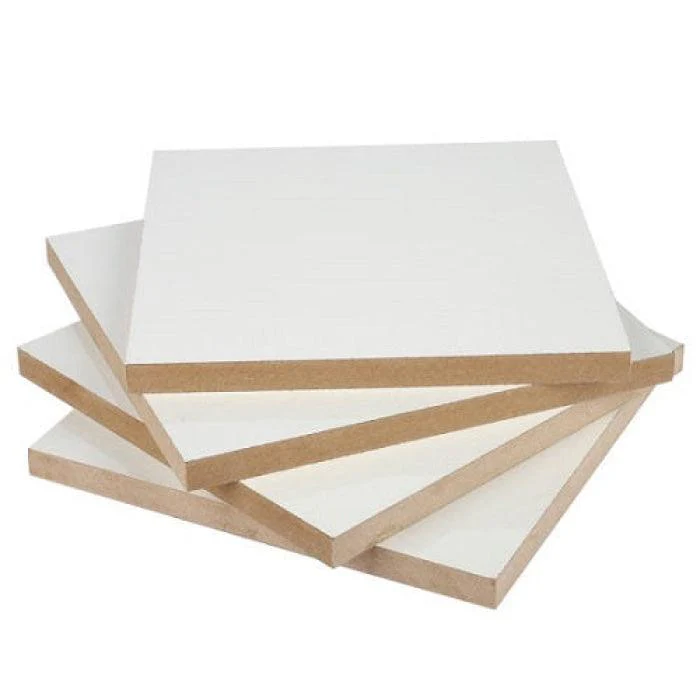
When selecting engineered wood products for furniture, cabinetry, or interior construction, understanding the advantages of mdf material is essential for making informed procurement decisions. Medium-density fiberboard has become one of the most widely used panel products across residential, commercial, and industrial applications, and for good reason. Its unique manufacturing process and consistent physical properties give it a distinct edge over many traditional wood alternatives. Whether you are sourcing boards for kitchen cabinetry, office furniture, or decorative paneling, knowing what mdf material brings to the table helps you align product choice with project requirements.
The benefits of mdf material are not limited to a single application or industry segment. From its smooth, uniform surface to its dimensional stability and machinability, mdf material delivers a combination of performance characteristics that make it a preferred choice for manufacturers, contractors, and designers alike. This article explores the key benefits of mdf material boards in detail, covering surface quality, structural consistency, workability, cost efficiency, and environmental considerations, so you can evaluate whether this engineered panel is the right fit for your specific use case.
Surface Uniformity and Finishing Quality
A Consistently Smooth Surface for Coatings and Laminates
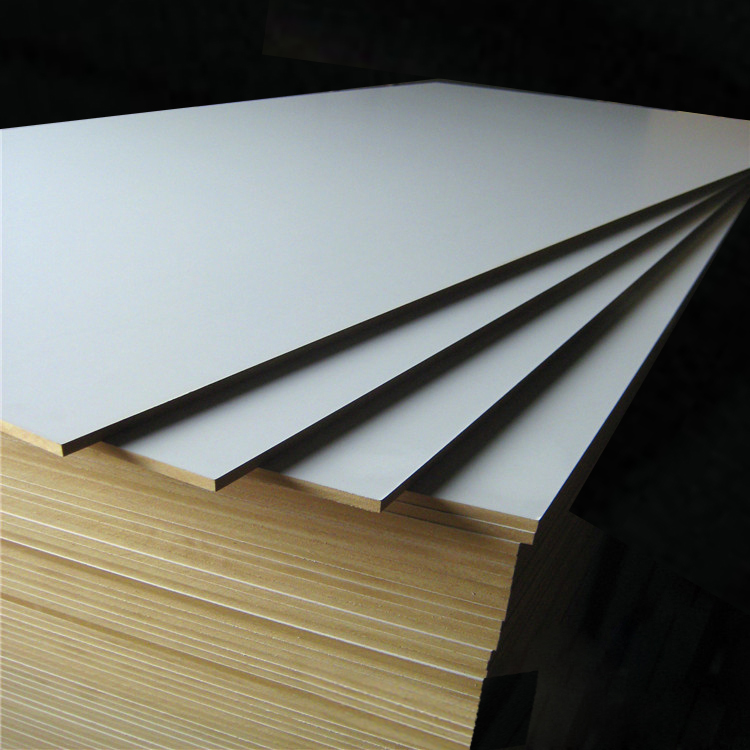
One of the most recognized benefits of mdf material is its exceptionally smooth and uniform surface. Unlike solid wood or particleboard, mdf material is manufactured by breaking down wood residuals into fine fibers, combining them with resin binders, and pressing them under high heat and pressure. This process eliminates the grain irregularities, knots, and voids that are common in natural wood, resulting in a flat, dense panel that accepts paint, veneer, and laminate with outstanding consistency.
For furniture manufacturers and cabinet makers, this surface quality translates directly into reduced finishing time and material waste. When applying melamine paper, PVC foil, or high-gloss lacquer, mdf material provides a stable base that minimizes surface preparation steps. The result is a cleaner, more professional finish that meets the visual standards demanded in both residential and commercial interiors.
This characteristic also makes mdf material particularly well-suited for decorative applications where appearance is a primary concern. Routed profiles, edge details, and carved patterns all come out sharper and more defined on mdf material than on many alternative substrates, giving designers greater creative flexibility without compromising structural integrity.
Edge Quality and Profile Machining
The dense, homogeneous composition of mdf material means that its edges machine cleanly and hold detail well. When routed or shaped, the edges of mdf material do not splinter or chip in the way that plywood or solid wood sometimes does. This makes it an ideal substrate for furniture components that require decorative edge profiles, such as cabinet doors, shelving units, and molding strips.
Edge banding adheres reliably to mdf material surfaces, and the tight fiber structure ensures that adhesive bonds remain strong over time. For production environments where consistency across large batches is critical, the predictable edge behavior of mdf material reduces rework rates and supports tighter quality control. This reliability is a significant operational advantage for manufacturers working at scale.
Dimensional Stability and Structural Consistency
Resistance to Warping and Seasonal Movement
Solid wood is subject to expansion and contraction as ambient humidity and temperature change, which can lead to warping, cracking, or joint failure over time. mdf material, by contrast, exhibits significantly lower rates of dimensional movement under normal interior conditions. Its engineered composition distributes stress evenly throughout the panel, reducing the risk of deformation that can compromise the appearance and function of finished products.
This dimensional stability makes mdf material a reliable choice for applications where tight tolerances must be maintained, such as fitted cabinetry, built-in furniture, and precision joinery. When panels need to align accurately over large surface areas or within modular systems, the predictable behavior of mdf material simplifies installation and reduces the need for on-site adjustments.
In climate-controlled interior environments, mdf material performs consistently across seasons, which is particularly valuable in regions with significant humidity variation. Specifiers and contractors who work in such environments often favor mdf material precisely because it eliminates the unpredictability associated with natural timber in finished installations.
Uniform Density Throughout the Panel
Unlike particleboard, which can have a coarser core with denser face layers, mdf material maintains a consistent density profile from face to core. This uniformity means that screws, fasteners, and hardware can be positioned anywhere across the panel without encountering weak zones or voids. The holding strength of mdf material is reliable and predictable, which simplifies hardware specification and installation planning.
For furniture assembly lines and modular construction systems, this consistency reduces the variability that can slow production or lead to quality issues. Engineers and product designers can specify mdf material with confidence that the mechanical properties will remain constant across different panel thicknesses and board sizes, supporting repeatable outcomes in high-volume manufacturing.
Workability and Machinability
Compatibility with Standard Woodworking Equipment
mdf material is highly compatible with standard woodworking machinery, including saws, routers, CNC machines, and drilling equipment. Its consistent density and absence of grain direction mean that cutting and shaping operations produce clean results without the need for specialized tooling or adjusted feed rates. This compatibility lowers the barrier to entry for manufacturers who want to incorporate mdf material into their production workflows without significant capital investment in new equipment.
CNC routing is particularly effective on mdf material, enabling complex shapes, intricate patterns, and precise cutouts to be produced with high repeatability. This capability is widely used in the production of decorative panels, speaker enclosures, retail display fixtures, and architectural millwork. The ability to machine mdf material to tight tolerances with standard CNC equipment makes it a versatile substrate for both functional and aesthetic applications.
Drilling and doweling operations also perform well on mdf material, with clean hole walls and reliable dowel retention. This supports the use of mdf material in flat-pack and ready-to-assemble furniture systems, where precise hole placement and consistent joint strength are critical to product quality and end-user assembly experience.
Gluing, Bonding, and Surface Treatment
mdf material bonds effectively with a wide range of adhesives, including PVA, contact cement, and hot-melt systems. Its porous surface provides good mechanical adhesion for glue joints, making it suitable for laminating, veneering, and edge bonding operations. The consistent surface energy of mdf material also supports reliable adhesion for coatings, primers, and sealers, reducing the risk of delamination or coating failure in service.
When used as a substrate for high-pressure laminate or melamine-faced panels, mdf material provides a stable, flat base that prevents telegraphing of surface irregularities through the decorative layer. This is a key quality advantage in applications where the visual appearance of the finished surface is a primary performance criterion, such as kitchen worktops, office furniture, and retail interiors.
Cost Efficiency and Material Utilization
Competitive Pricing Relative to Solid Wood
One of the most commercially significant benefits of mdf material is its cost efficiency compared to solid timber. Because mdf material is manufactured from wood fibers and residuals that would otherwise be waste, it makes productive use of raw materials that solid wood processing cannot utilize. This resource efficiency is reflected in the pricing of mdf material, which is generally more accessible than equivalent thicknesses of solid hardwood or softwood lumber.
For B2B buyers sourcing panels in volume, the cost advantage of mdf material can be substantial, particularly when large surface areas need to be covered or when consistent panel dimensions are required across a project. The ability to purchase mdf material in standard sheet sizes with predictable properties simplifies procurement planning and reduces the cost variability associated with grading and selecting natural timber.
In competitive manufacturing environments, the lower material cost of mdf material contributes directly to product margin and pricing flexibility. Furniture producers and interior fit-out contractors who use mdf material as a primary substrate can offer competitive pricing to their clients while maintaining acceptable profit levels, which is a meaningful commercial advantage in price-sensitive market segments.
Minimal Waste in Production
Because mdf material is available in large, consistent sheet sizes with no natural defects, offcuts and waste are minimized during cutting and nesting operations. Unlike solid wood, where knots, splits, and grain irregularities may require sections to be discarded, every part of an mdf material panel can be used productively. This high material utilization rate reduces waste disposal costs and improves the overall efficiency of production operations.
Optimized nesting software works particularly well with mdf material because the absence of grain direction means that panel orientation does not affect cutting quality or structural performance. Parts can be nested in any direction to maximize yield, which further reduces material consumption and cost per finished component. For high-volume manufacturers, these efficiency gains accumulate into significant savings over time.
Environmental and Sustainability Considerations
Use of Wood Residuals and Recycled Fiber
mdf material is manufactured using wood fibers derived from sawmill residuals, forest thinnings, and in some cases recycled wood sources. This use of lower-grade raw materials means that mdf material production places less pressure on primary forest resources than solid timber processing. For buyers with sustainability commitments or green building certification requirements, the resource efficiency of mdf material is a relevant consideration in material selection.
Many mdf material products are available with third-party certifications that verify responsible fiber sourcing and low formaldehyde emissions. These certifications support compliance with indoor air quality standards and green building rating systems, making mdf material a viable option for projects where environmental performance documentation is required. Specifiers working on certified green building projects should verify the specific certification status of the mdf material they are sourcing.
Low-Emission Formulations for Indoor Applications
Formaldehyde emissions from resin binders have historically been a concern with engineered wood products, including mdf material. However, advances in resin chemistry and manufacturing controls have led to the widespread availability of low-emission and ultra-low-emission mdf material grades that meet stringent indoor air quality standards. These formulations are now standard in many markets and are required for compliance with regulations governing indoor environments in residential and commercial buildings.
When specifying mdf material for interior applications, buyers should confirm that the product meets the applicable emission standards for their target market. Low-emission mdf material is suitable for use in kitchens, bedrooms, offices, and other occupied spaces where air quality is a priority. The availability of compliant mdf material grades means that environmental performance does not need to be traded off against the functional and economic benefits that mdf material provides.
FAQ
Is mdf material suitable for use in humid environments such as kitchens and bathrooms?
Standard mdf material is not recommended for direct exposure to moisture or high-humidity environments, as it can swell and lose structural integrity when wet. However, moisture-resistant grades of mdf material are available and are specifically formulated for use in kitchens, bathrooms, and other areas with elevated humidity. These moisture-resistant variants incorporate hydrophobic additives that reduce water absorption and improve dimensional stability under damp conditions. For applications involving direct water contact, additional surface sealing or protective coatings are advisable.
How does mdf material compare to plywood in terms of structural performance?
mdf material and plywood have different structural profiles that make each more suitable for specific applications. Plywood generally offers higher bending strength and impact resistance due to its cross-laminated veneer construction, making it preferable for structural applications such as flooring, roofing, and load-bearing panels. mdf material, on the other hand, excels in applications where surface smoothness, machinability, and dimensional consistency are the primary requirements, such as furniture faces, cabinet doors, and decorative panels. The choice between the two depends on the specific performance demands of the application.
What thicknesses is mdf material commonly available in for furniture and cabinetry applications?
mdf material is produced in a wide range of thicknesses to suit different applications. Common thicknesses for furniture and cabinetry include 9mm, 12mm, 15mm, 18mm, and 25mm, with thinner sheets available for backing panels and thicker boards used for shelving and structural components. The 18mm thickness is particularly widely used for cabinet carcasses and furniture panels due to its balance of strength, weight, and cost. Buyers should confirm available thicknesses with their supplier, as product ranges can vary by market and manufacturer.
Can mdf material be painted directly without a primer?
While mdf material has a smooth surface that accepts paint well, applying a primer before the topcoat is strongly recommended. The porous edges and faces of mdf material can absorb paint unevenly if applied without a primer, leading to a patchy or rough finish. A suitable primer seals the surface, reduces absorption, and provides a uniform base for the topcoat, resulting in a smoother and more durable painted finish. For edge surfaces, which are more absorbent than face surfaces, a dedicated edge primer or multiple primer coats may be necessary to achieve a consistent result.
Table of Contents
- Surface Uniformity and Finishing Quality
- Dimensional Stability and Structural Consistency
- Workability and Machinability
- Cost Efficiency and Material Utilization
- Environmental and Sustainability Considerations
-
FAQ
- Is mdf material suitable for use in humid environments such as kitchens and bathrooms?
- How does mdf material compare to plywood in terms of structural performance?
- What thicknesses is mdf material commonly available in for furniture and cabinetry applications?
- Can mdf material be painted directly without a primer?