 EN
EN

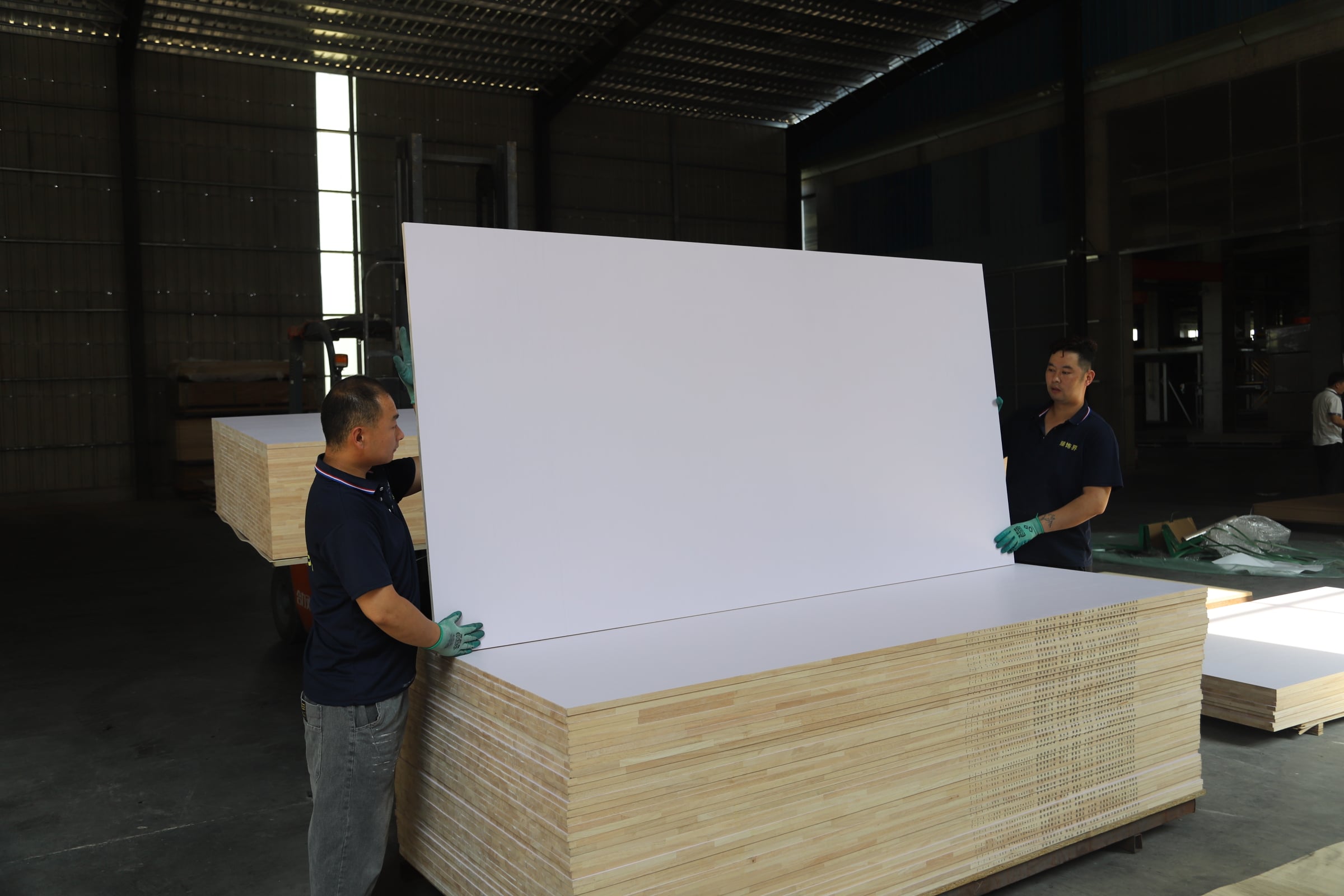
Particleboard has emerged as one of the most versatile and cost-effective engineered wood products in modern construction and furniture manufacturing. This composite material, made from wood chips, sawmill shavings, and synthetic resin binders, offers numerous advantages that make it an ideal choice for both residential and commercial applications. Understanding the key benefits of particleboard can help manufacturers, contractors, and homeowners make informed decisions about their material selections for various projects.
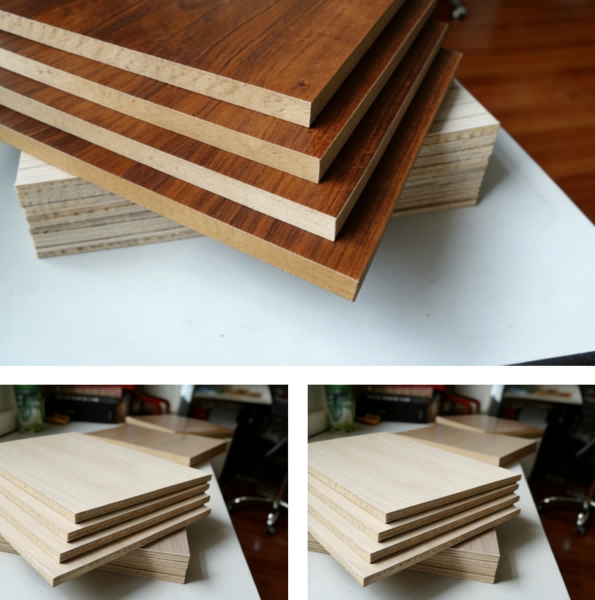
Economic Benefits and Cost Efficiency
Affordability Compared to Solid Wood
The primary economic advantage of particleboard lies in its significantly lower cost compared to solid wood alternatives. Manufacturing particleboard utilizes wood waste and smaller wood particles that would otherwise be discarded, making it an economical choice for budget-conscious projects. This cost-effectiveness extends beyond the initial purchase price, as particleboard requires less raw material investment and energy consumption during production processes.
When compared to plywood or solid hardwood, particleboard typically costs 30-50% less per square foot, making it an attractive option for large-scale construction projects and furniture manufacturing. The reduced material costs allow manufacturers to offer more competitive pricing to consumers while maintaining healthy profit margins. Additionally, the consistent availability of raw materials for particleboard production helps stabilize pricing throughout market fluctuations.
Reduced Waste and Material Optimization
Particleboard manufacturing exemplifies efficient resource utilization by transforming wood waste into valuable building materials. Sawmill residues, wood chips, and even recycled wood products can be processed into high-quality particleboard, reducing overall waste in the lumber industry. This optimization of materials contributes to lower production costs and supports sustainable manufacturing practices.
The ability to utilize various wood species and particle sizes in particleboard production provides manufacturers with flexibility in sourcing raw materials. This versatility helps control costs by allowing producers to use locally available wood waste, reducing transportation expenses and supporting regional economies. The efficient use of smaller wood particles also means that forests can be harvested more completely, maximizing yield from each tree.
Structural and Performance Advantages
Uniform Density and Stability
One of the most significant structural advantages of particleboard is its uniform density throughout the panel thickness. Unlike solid wood, which contains natural variations in grain direction and density, particleboard offers consistent performance characteristics across its entire surface area. This uniformity eliminates weak spots and provides predictable load-bearing capabilities for structural applications.
The controlled manufacturing process of particleboard ensures consistent thickness tolerance and surface smoothness, which is crucial for precision applications in furniture making and cabinet construction. The absence of knots, grain patterns, and other natural wood defects makes particleboard an ideal substrate for veneer application and laminate finishes. This stability also reduces the risk of warping, splitting, or checking that commonly occurs with solid wood products.
Dimensional Stability and Reduced Movement
Particleboard exhibits excellent dimensional stability compared to solid wood, with minimal expansion and contraction due to moisture changes. The random orientation of wood particles within the board structure helps counteract the natural tendency of wood to move along its grain direction. This stability is particularly valuable in applications where precise dimensions must be maintained over time.
The engineered nature of particleboard allows manufacturers to control moisture content during production, resulting in panels with consistent moisture levels throughout their thickness. This controlled moisture content, combined with the cross-directional particle arrangement, significantly reduces seasonal movement and helps maintain joint integrity in assembled products. For cabinet doors, shelving, and furniture components, this dimensional stability prevents gaps and alignment issues that can occur with natural wood.
Manufacturing and Processing Benefits
Excellent Machinability and Workability
Particleboard offers superior machinability compared to many solid wood species, allowing for clean cuts, precise drilling, and smooth edge finishing. The uniform composition of particleboard eliminates the unpredictable grain patterns that can cause tear-out or splitting during machining operations. This consistent behavior makes it easier for manufacturers to achieve precise tolerances and high-quality finishes.
The smooth, uniform surface of particleboard provides an excellent base for various finishing techniques, including painting, veneering, and laminating. Unlike solid wood, which may require extensive surface preparation to achieve uniformity, particleboard presents a ready-to-finish surface that accepts coatings evenly. This characteristic reduces finishing time and material consumption while improving the final product quality.
Consistent Quality and Standardization
Manufacturing processes for particleboard allow for strict quality control and standardization that is difficult to achieve with natural wood products. Each panel is produced under controlled conditions with consistent pressure, temperature, and adhesive distribution, resulting in predictable performance characteristics. This standardization is crucial for industries requiring reliable material properties for design calculations and quality assurance.
The ability to produce particleboard with specific performance characteristics, such as enhanced moisture resistance or fire retardancy, provides designers and manufacturers with tailored solutions for specialized applications. Standard grades and classifications ensure that particleboard meets specific industry requirements, while quality control measures maintain consistency across production runs.
Environmental and Sustainability Aspects
Resource Conservation and Recycling
Particleboard production contributes significantly to forest resource conservation by utilizing wood waste that would otherwise be burned or sent to landfills. By converting sawmill residues, wood chips, and even post-consumer wood products into useful building materials, particleboard manufacturing reduces pressure on virgin forest resources and extends the useful life of harvested wood.
The recycling potential of particleboard also supports circular economy principles in the building materials industry. Old particleboard products can be ground up and incorporated into new particleboard production, reducing waste and conserving raw materials. This recyclability, combined with the use of renewable wood resources, makes particleboard an environmentally responsible choice for sustainable construction practices.
Energy Efficiency in Production
The manufacturing process for particleboard is generally more energy-efficient than producing solid lumber or plywood products. The ability to use smaller wood particles eliminates the need for energy-intensive processes like log sawing and veneer peeling. Additionally, the heat generated during the pressing process can be captured and reused, improving overall energy efficiency in manufacturing facilities.
Modern particleboard production facilities often incorporate sustainable energy sources and waste heat recovery systems, further reducing their environmental impact. The efficiency of particleboard manufacturing processes, combined with their use of waste materials, results in a lower carbon footprint compared to many alternative building materials.
Application Versatility and Design Flexibility
Wide Range of Applications
The versatility of particleboard makes it suitable for numerous applications across residential, commercial, and industrial sectors. From furniture manufacturing to construction sheathing, particleboard provides reliable performance in diverse environments. Its ability to accept various surface treatments and finishes makes it adaptable to different aesthetic requirements and functional needs.
In furniture manufacturing, particleboard serves as an excellent core material for veneered panels, providing stability and smoothness while reducing costs. For construction applications, particleboard offers reliable performance in subflooring, wall sheathing, and roof decking where structural requirements can be met cost-effectively. The material's consistent properties make it suitable for both visible and concealed applications.
Surface Treatment Options
Particleboard's smooth, uniform surface accepts a wide variety of finishing materials and techniques, providing designers with extensive creative possibilities. Melamine laminates, wood veneers, paint systems, and decorative films all adhere well to particleboard surfaces, allowing for customized appearances and performance characteristics.
The ability to apply different surface treatments to particleboard enables manufacturers to create products that mimic expensive hardwoods or achieve unique decorative effects at a fraction of the cost. This flexibility supports creative design solutions while maintaining budget constraints, making high-quality appearances accessible across various market segments.
FAQ
Is particleboard suitable for moisture-prone areas
Standard particleboard is not recommended for high-moisture environments, but moisture-resistant grades are available for bathroom and kitchen applications. These specially treated particleboard products incorporate water-resistant adhesives and surface treatments that provide adequate protection against typical household moisture levels. However, direct water contact should still be avoided, and proper sealing of edges and surfaces is essential for optimal performance.
How does particleboard compare to plywood in terms of strength
While plywood generally offers superior strength-to-weight ratio and structural properties, particleboard provides adequate strength for many applications at a lower cost. The choice between particleboard and plywood depends on specific load requirements, moisture exposure, and budget considerations. For non-structural applications like furniture components and decorative panels, particleboard often provides sufficient strength while offering cost advantages.
Can particleboard be recycled at the end of its useful life
Yes, particleboard can be recycled through various methods, including grinding for use in new particleboard production or processing into biomass fuel. Many manufacturers now accept post-consumer particleboard for recycling, though the presence of laminates or finishes may affect recyclability. Proper disposal through construction waste recycling programs helps ensure that particleboard waste is handled environmentally responsibly.
What factors should be considered when selecting particleboard grade
Grade selection should consider the intended application, load requirements, moisture exposure, and surface finish needs. Higher density grades offer better screw-holding power and structural performance but cost more than standard grades. Surface quality grades affect finishing requirements, while specialty grades like moisture-resistant or fire-retardant options may be necessary for specific applications. Consulting with suppliers about performance requirements ensures appropriate grade selection for each project.